The Future of Voice and Human-AI Synergy: Customer Contact Week Nashville 2025
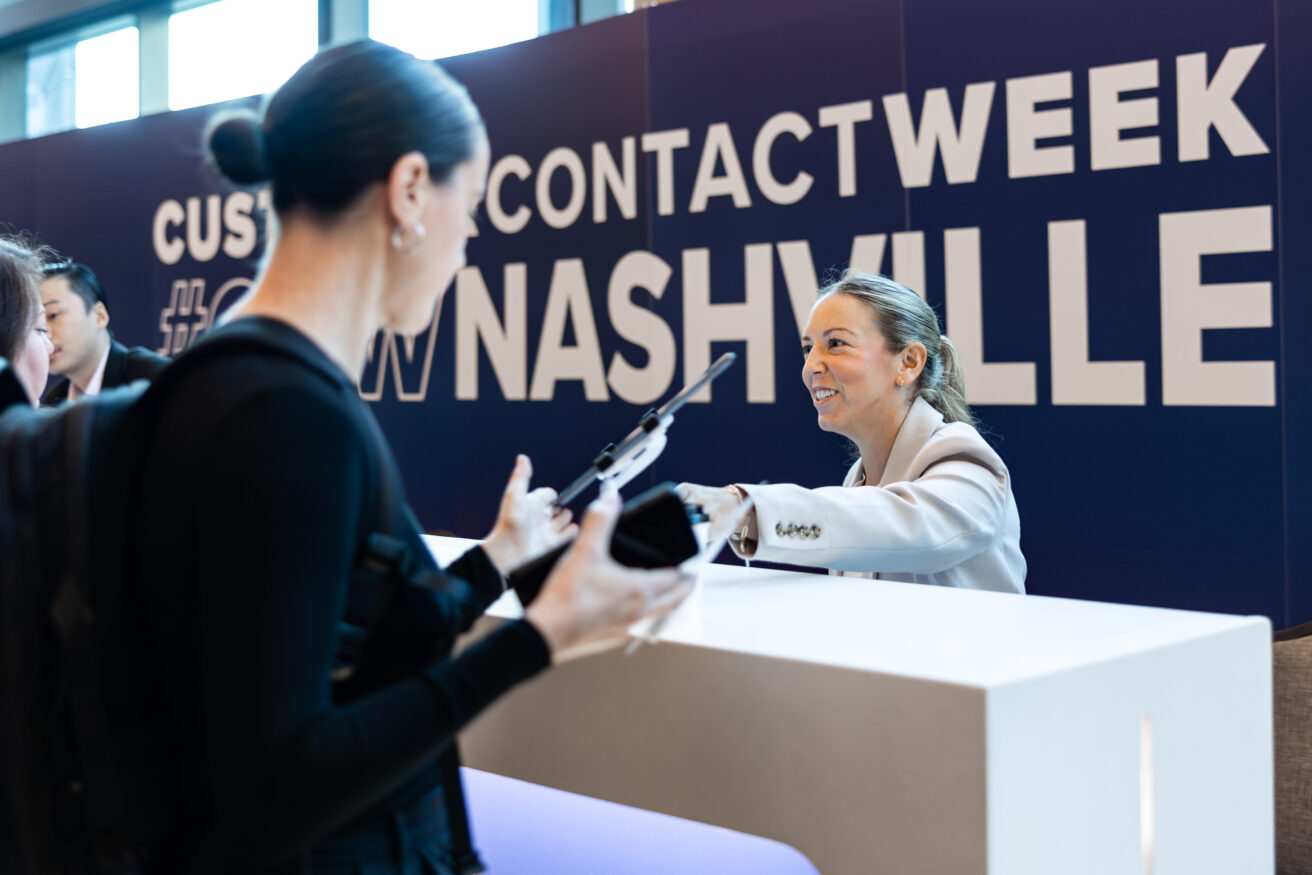
This session from Customer Contact Week (CCW) Nashville 2025 explores the evolving landscape of customer service, focusing on the revitalization of the voice channel and the strategic transition of AI from pilot programs to full-scale production.
Key Takeaways
- Voice is Still King: Despite the rise of digital channels, 66% of consumers prefer live phone support as their first choice for human interaction.
- The Personalization Driver: In self-service, personalization—defined as customer control and historical recognition—is the primary driver of satisfaction.
- Bridging the Resolution Gap: While 70% of live phone calls are resolved, only 20% of automated voice interactions reach resolution, representing a massive opportunity for conversational AI investment.
- Overcoming AI Pilot Stall: Most AI initiatives fail to scale due to “unknown unknowns” and a lack of clear success metrics. Success requires a “Crawl, Walk, Run” strategy, moving from small features like call summaries to full-scale automation.
- The “Water” Framework for Employees: To prevent disengagement—which costs the global economy $8.8 trillion—leaders must ensure work is meaningful, use AI as a career accelerator rather than a threat, and prioritize radical transparency.
Read the Complete Transcript
Welcome to CCW Nashville. Please welcome to The stage, your host, Rosanne Rogers.
Hi all. I should say, welcome to some of you. And welcome back to some of you others, because you are joined us this morning. So how’s everything been going so far? Pretty good. Lunch was good. Also expo hall. Okay, so how many of you in the room have gotten ten sponsors with your badge? Because remember, what happens if you get at least ten or more.
You’re eligible to be in the drawing for a CCW use prize drawing, which is tomorrow at lunch at the CMP lounge in the expo. So you got to do that because the prize package is really good. You know, I do have an inside track on some of this stuff, so I’m trusting me. Okay, I would I would not steer you wrong.
Ryan. Jan I would not steer you wrong. And then tomorrow, when everyone’s here because Dick Mitel is here tomorrow, we need to get a huge selfie because we’re not going to do it now with the empty seats right there. Right. Where is everybody? Come on, let’s go. This is going to be an amazing session. Do you want to remind you and a couple of things to consider.
Line of course thanks to observe AI powered by them. If you have any questions, be sure to call 725525 8535. No Dolly, not Dolly Parton, but the other Dolly will be able to help you. Also, if you have any questions or you have any problems, maybe technical problems if your app is not working or something else is going on, be sure you stop by the registration desk and there’ll be someone there to actually help you too.
Now moving right along to is the program. This program is great because it combines a combination of things as far as technology as well as a necessity of the value of human experience, right, in the effectiveness of partnerships and how crucial that is for all of us to do our job. So let’s get this session started right now.
Speaker 3:
Up next, the future of voice automating customers favorite channel? Please welcome to the stage Nicole Kyle.
Hi, everyone. Happy Nashville. How are we?
Okay. We went out last night.
Thank you so much for being here at KW Nashville. Thank you for coming to this session today. I’m excited to to get into it. You heard a moment ago in the in the brand video that CMT is CCW. So CMP research is the research and advisory arm of CMT, the organization that puts on this wonderful event. Our events division, of course, creates the event research and advisory.
That’s me and our digital event. It’s a digital division, creates community. Always on for, customer contact and KCS leaders. So I want to pivot to the topic at hand. And believe it or not, I’m going to start with something.
Unknown:
Called a toxic trait. Anyone know what I’m talking about?
Speaker 3:
When I talk about toxic traits? Chat. Yeah. Yes. No chocolate trait. Do they all have them? Thank you. Thank you for being vulnerable. Well, I have one too. But in case you don’t know what a toxic trait is, something like, maybe it’s pretty innocuous. Usually. Right? When we use it in the casual sense, you might go to a restaurant and be the kind of person who orders a thousand customizations every time you go out and your friends kind of give you, give you, a hard time about it or maybe or one of the many men who have never picked up a tennis racket who think they could get one game off of
Serena Williams. But no, I digress. Toxic traits are just these innocuous things that we do that might annoy our nearest and dearest. And we all have them, and I certainly do. And this is a preview of mine. Does anyone recognize what’s behind me? I think someone said it. Voice notes. Right? Yes. I send voice notes, I send them, I love receiving them.
I love sending them. I love telling my friends about my day. I like to have, like, a thousand bags in one hand and leave a voice note with my phone in the other. Because otherwise I may not reach out to my friend that day. I might have been too busy to get back to their text or something like that.
So I love voice notes and my friends hate that I send them. And guess what? My friends are not alone. There’s been a lot of social discourse recently about voice notes. The, our friend Flora there calls them tyrannical. The Atlantic says maybe don’t send them. The New York Times says voice. No etiquette. How long is too long?
Well, as a, common, offender of the too long voice notes, habit, I, I empathize empathize with these writers. And, you know, I empathize with my friends a little bit, so, to be honest, still doesn’t stop me. Still loves sending a voice. Note. But you can’t see the date on all of these articles.
But these articles are kind of from 2023 or 2024. And it turns out that this kind of debate raging amongst the social media community, the tech community, has resulted in some updates. And if you’re like me and you are a voice note sender, you may have been really relieved when iOS and WhatsApp and all the other messaging platforms out there, changed, their software to enable senders like me to send a voice note.
I’m someone who loves to communicate through tone. I like to talk about a lot of different things. I like to leave that voice note. But guess what? Now on most messaging applications, the receiver of that voice now has the option to raise it up to their ear and listen to it, or read a transcript. Pretty cool and very good news for my friends.
So with this change, everyone is happy. I’m happy. I can send the voice now and my friends are happy that they can maybe listen to it, but more often than not, read the transcript. Okay, so how does an ongoing challenge between me and my friends relate to what we do in customer contact? Well, we’re here to talk about voice.
And as we think about the voice experiences our customers have the tried and true, the, you know, never to be abandoned, channel that we, we all know and love. Our customers love it, too. Customers love talking on the phone. The data that you see behind me shows, customers, consumers first choice preference for live support. So when presented with many different options for live human agent support, talking on the phone with an agent.
It’s exchanging messages online with a human agent, exchanging messages on an app with a human agent. Emails, text, social media messages with an agent. By and large, 66%. A massive majority say my first preference is calling in and speaking with the human agent. Now, we all know that you’re going to ask the next question, which is how does that break down by generation?
I’ve gotten that follow up question so many times on that slide. I finally just was proactive and put it into the deck. I see the phones going up so I can see my my instincts are right. What we’ve done on this side is we’ve broken down that preference by generation, and we can see that there is a more over a greater preference for live phone interactions in that 55 and up group.
But the greatest preference, most strongly held preference for phone in the 65 in our group. Now as we look across the other generations, we can see it’s a little bit different. You know, 37% of 25 to 34 year old that it gets, the first choice preference for calling in and talking on the phone does decline.
The younger generations that we look at. Younger people are. People are. So what we have here is we have a majority of customers who love talking on the phone. And we have segments of those customers who feel more or less strongly about how much they love the phone. When I want to talk about today is the fact that voice doesn’t have to be live phone.
I think about my experience with voice notes. One of the reasons I started sending voice notes is, believe it or not, I’m an analyst. I’m an advisor. I am on the phone all day for work. So as much as I love my friends and family, the thing I hate doing after a long day of work is making more phone calls to talk to more people.
So what I do instead? Appreciating and acknowledging. I love the messages and tone and what I can communicate by leaving a voice note. But that’s on my terms, right? I can send a voice note when I’m in a headspace to do so, and I can, you know, hopefully the receiver can also listen to it on their terms.
So it makes me wonder, does our best chance at increasing adoption of self-service, automated service, basically any service interaction that doesn’t have life support? Is that the voice channel? Customers love talking, but they increasingly want to talk on their own terms. And we see that phenomenon play out on the next slide. So demand for self-service interest in self-service is growing.
When I talk about self-service, as I just said, I might use self-service and automated service kind of interchangeably. Again, really talking about any service interaction where a customer is not interacting with a live human agent. 72% of executives say, your peers say that customer demand for self-service is absolutely increased in the last three years. 72% of customers want to spend less time interacting with human customer service.
So even if they want to interact with the humans, they want it to be fast. This supports a lot of what we’re seeing around the rise of the self-directed customers. Customers who place a higher premium on their own time and who want service on their own terms the same way I want to send voice notes on my terms when we dig into the data even more deeply, and we did a driver analysis of what drives customer satisfaction, specifically in self-service interactions.
And again, to support this theory and this hypothesis and this reality that customers want to be served on their own terms, we see personalization is far and away the biggest driver of customer satisfaction in a self-service interaction. How did we define personalization? Two things. One, the customer has control over how they’re served. Going back to they can be served on their own terms.
That might look like multimodal channel switching. Maybe I start the service some traction in the car on voice because I’m driving to work and maybe it’s still going on as I’m trying to hop into my first meeting. So I want to switch over to chat or to a self-service portal that that’s one half of personalization. And the other half of personalization is, of course, the channel recognizes the customer.
They don’t have to repeat their information over and over again. So that’s what customers want. They want to be served on their terms. They want control over the service experience. They want personalization. And we know that they love the phone. We know that they love talking. But where’s the rub, so to speak? Well, adoption of self-service voice is low, and I want to caveat here when I’m talking about self-service voice in that yellow bar I’ve highlighted at the bottom there, I’m scoping out standard touchtone IVR.
I’m talking self-service voice. So conversational AI, generative AI, voice AI, voice bot tools. Only 3% of consumers currently say their first choice for a self-service interaction is calling in. And speaking with an AI about that is conversational. That number is much higher when we look at standard IVR, believe it or not, because old habits die hard. But there’s a real opportunity here and we see the opportunity manifest even more deeply on the next slide.
When we look at the customer experience of a self-service voice interaction interaction, there’s absolutely room to improve. 20% of customers said that their last interaction with a voice bot conversational IVR, was resolved. That number is 70% for consumers who had their last interaction with a live phone channel. So again, if we think about starting from that place of customers love talking and they love voice, well, it’s one experience results and resolution so much more often.
Of course they’re going to keep seeking live phone. As opposed to, again where we’re current state, the current state of where we’re at with live. Excuse me. Automated voice resolution is much lower. Of course, customers aren’t going to seek it. And that’s why we’re seeing adoption challenges. So the thing that I’m encouraged by is executives are taking note of this.
We realize that there’s an opportunity. We realize there’s a chance to tap into customers preference for voice and talking, as as a mode of communication. If we can just upgrade the experience and make the voice channel stronger, makes the automated voice channel stronger. 41% of companies are increasing investment in voice bot conversational IVR tools in the next two years.
Now we hear from these executives at the very same time that, of course, the technology marketplace is chaotic. I hope you’re all enjoying the expo hall and having a great experience, but it wouldn’t be a surprise if at the same time, at times you felt overwhelmed because nearly half of executives would say the same thing. 45% of execs say it is hard to understand and differentiate customer contact and seek solutions from one another.
Another 42% say they spend more time on tech demos, and they would ideally like. So this is where CRM research comes in. Here at the research, one of the many things we focus on is how to empower customer contact and KCS executives to make better technology and partnership investment decisions. As part of that, we’ve built our own evaluator research framework, the Sam Research Prism.
Each prism, you may have seen them in the expo hall or in the hallways here. In the app, each prism focuses on a specific area of customer contact and course technology. Given that we’re talking about voice today, I wanted to present findings from the conversational IVR voice bot prism. I put the definition of conversational IVR slash voice bot behind me.
One of the most challenging but important jobs of the analyst team and the research team is to define these categories and stick to it. So we have the definition there. Of course, you might hear words like IVR or voice AI or conversational AI used interchangeably to mean the same thing, but I just want you to know that in context of the prism, when I’m saying voice bot slash conversational IVR, this is what I mean.
What’s behind me? So when we go out and do our prism analysis, I’ll talk more about this, but we collect data from all different angles. And a big part of what we do is we go out to customer contact and KCS leaders who are in the market for a voice bot for a conversational IVR solution. We call this the market data that we collect.
They’re either currently in the market for the solution or they have been in the last 90 days. When we look at that market data, we find some pretty cool things. So, across our market data, when our, executives respond to a set of questions about the top 40 to 50 conversational IVR voice bot providers out there, they tell us which investment criteria they feel more confident in.
The market’s ability to deliver on when it comes to voice and voice bot. And then they tell us which investment criteria they feel less confident in. And then we can isolate the most confidence and the least confidence. So what you’re seeing on the slide behind me on the top market strengths for voice bot I accuracy and innovation and future roadmap.
What does this, tell me? This tells me a couple of things. Number one, the market’s really confident in the AI that’s underpinning these tools. If you’re a solution provider in the room, I would just be really candid with you and say that also means it’s going to be hard to differentiate on your AI. Just saying to a prospect our AI is better, it’s more accurate.
It’s not. That alone is not going to win you as much business as you might think, because the market feels pretty confident, in, in solution providers ability to deliver on AI accuracy overall. Similarly, when we look at innovation in future strategy and future roadmap, this I think, is a real sign of confidence that the customer contact marketplace, and executives that has confidence in these providers to keep innovating.
They’re excited for things to come. They’re bullish on the fact that the experience will get better and better. So that was really encouraging. When we look at market opportunities. We have pricing and reporting. Pricing. I’ll just quickly say, across all the tech categories that we evaluate for prism, pricing comes up as an opportunity. I’m not surprised by this.
You’re probably not surprised by this. We see and a lot of buyer insight and executive data that we collect, that customer contact. And organizations are under more cost pressure this year compared to this time last year. We know reducing costs is top of mind. So of course pricing is going to be an opportunity. But that second opportunity there’s reporting.
And that’s really interesting because when we go out and look at the user data, so we actually go out and survey enterprises who have invested in a voice bot. And we asked them about their experience with that particular voice bot provider. The users. Say a similar thing when it comes to opportunities. But this time reporting and pricing are flipped.
So, the reporting element was really intriguing to us as an analyst team. We kind of dug into this more deeply, and, you know, it made sense because what we’re seeing is, you know, your bots are only as good as the customer analytics and insights that you’re able to feed it. And the best bots learn from the best agents.
And it’s customer analytics and insights tools, autocorrect, tools that are going to give you those insights. You need to, train your AI, train your voice AI train, train your chat bot as well. So we’re really interested to see that as an opportunity. We were encouraged by the fact that users are happy with the level of security of customer data.
And of course, also happy with the level of support that they’re getting from the market, which we know is important to be continuously supported, even post implementation. So those are some macro insights from our Prism analysis into conversational IVR and voice. But, I want to just kind of reinforce when we think about prism, you may have used an evaluative research framework before, but we really say the prism helps you see the technology marketplace more clearly, helps you differentiate solutions from one another more easily, and helps you bring organization to a chaotic and blurry market.
So again, I really hope you kind of take this to heart in your, decision decisions that are forthcoming. So I have the prism graphic behind me, a kind of explain the methodology already. We collect data again from the marketplace. So those perspectives and customer contact buyers, they collect data from real life users. So enterprises who have gone out and invested in the solutions we’re evaluating.
What has been your experience rolling out that particular technology and of course the analyst evaluation as well. We use, a whole set of information demos, RFI, secondary research and so forth to inform our perspective, the market data. Right. The, market confidence, customer contact and KCS leaders who are in the market for voice bot, their perspectives are captured on the Y axis.
We call this the market confidence axis. It’s the index of two things. The percentage of the market that is aware of that particular voice bot solution and of those who are aware what their perception is of that solution. Is it a, negative to neutral to positive perception? So the most well-known players with the most positive perception, will have, a higher placement on the y axis.
Now, perception is not always reality. And we have a lot of, fun, kind of, you know, getting into the weeds with our clients, on, on some of this data. But it’s a really helpful tool that y axis to know where your peers have the most confidence, given how many things are in the market and how overwhelming that can be.
The x axis captures the progressiveness of the capability. So how sophisticated is the tool? What can the tool do? We use the analyst perspective as well as the user data to inform that x axis placement, our understanding of the progressiveness of the tool. And we look at these ten investment criteria that are behind me to indicate progressiveness.
So pricing as I talked about security reporting, integration, UX, I won’t read them all out, but that’s the the host of things or evaluating when we look through an RFI and when we review a live demo now the x axis, the progressiveness and the y axis, the marketplace confidence, they come together to yield a five different segments that kind of correspond nicely to our color gradient.
Here we have pioneering providers, leading providers, core performing providers, emerging providers and up and coming providers. Kind of flip those there. But these providers have all been evaluated through the Prism process, with a couple of exceptions, have all made a live demo and completed an RFP for our team. And it was a lot of fun looking at this marketplace and uncovering precisely what could upgrade the voice experience.
So what I’d like to do in a moment is introduce our refreshed prism for voice, bot and conversational IVR. We had about, 20 solution providers who were evaluated. And, let’s unveil that now. Okay. So this is our prism for conversational IVR slash voice bot. You’ve got and I’ve got some call outs here that might make it, more, more fun.
So we’ve got, two solution providers in the pioneering segment. We have a fair few in the leading segment. You have observe AI race, Rasa. Sorry. Cognitive. You got cut off when we were a lot of these things got cut off, and now I’m sad it’s a live show. Yeah. Okay. Well, you know, I can just read them all out.
So we have Google and Genesis and pioneering Rasa. Observe AI, cognitive retail AI, poly AI, leaping AI in leading. We have new I call minor zing Lee float bot. Good call. Replicant tech. Capacity Allura and assembled in core performing. And we have, gladly and free come in up and coming. If you need me to say that again, find me after, the presentation.
We will be putting this in the app. We will be putting this, online, and I’ll talk about how you can register to receive it in full. But this is the snapshot of the the prism. What’s cool about this is, you know, there’s so much happening in voice. We saw our first voice prism in April, and so much has changed already.
And you could see, like, really interesting progressions and market confidence and progressions in capability. That, really kind of blew our mind. So, it’s cool to see how quickly things are updating and getting better. And that’s why we refresh as often as we do now, if you’d like to see the full, white paper for conversational IVR slash voice bot, you can scan this QR code and, be registered to receive the full prism white paper.
That Prism white paper has, of course, the top line prism graphic, which have the company names cut off. And, it also, of course, has vendor profiles, in there, with a little bit more detail about each provider. I should be really clear here when we’re evaluating these solutions. We’re speaking specifically to voice bot and conversational IVR.
We’re not talking about the chat bot. We’re not talking about their auto Q QM, we’re not talking about, their customer analytics insights tools. We are approaching that prism evaluation really fit for purpose kind of narrow lens, which makes it hopefully more useful to to all of you. The other thing you would have seen on the prior slide is there’s two companies here, Genesis and Google, who are, their dots are black at the very top.
And that’s they’re passive participants. So they did not, do a live demo nor a, company built RFI. So analysts evaluation data was done through secondary research, things that we’d seen previously. But we like to disclose that because we think it’s important, to, Yeah. Be really transparent. Still very confident in our evaluations and market data.
Said what the market data said. The user data reinforce the analyst evaluation. But I do like to be transparent about that and kind of explain what passive participant means. It was really important to us to, to make sure that, you know, we were transparent about, companies, you have a high level of market awareness who might be large tech players, like a Google, and also, companies who have a large market confidence because, you know, they’re a cash provider as, as of course, Genesis is.
Cool. Okay. So this is just about time when I start wrapping up, but some exciting things here. So if you’re a research client, you get a lot more data under the hood. So you get, breakdowns in a customizable, prison dashboard where you can actually filter by investment criteria and see how each company who’s evaluated performed on that particular investment criteria.
So I have clients who come to me and they say, you know, I call my, top, top concern is security. So they’ll come into the prism dashboard and they’ll filter by security and see, how everything kind of shakes out. You can also, in this dashboard, isolate one of the three dimensions. I was talking about earlier.
You can isolate just the user, dimension, if you’re just interested in what peers who have actually invest in the solution are saying, you can isolate the analyst perspective if you’re just curious to know what the analyst team, evaluated. And you can also isolate the market, marketplace, which is actually very useful for, if there’s any solution providers in the room and there’s marketing teams there.
That’s very useful to kind of know which of your messages are penetrating. So you can come demo that tool at, our booth. Particularly helpful if you’re in the market for one of the, in the market for solution, one of the categories that we cover. So we hope to see you at the CMP lounge. We have another we have a sixth prism category that we’re adding, workforce management.
Which is very, exciting. So we’ll be launching that at CCW Orlando in January. So be be forewarned. And if you like what you see any like what you learned and you like the ideas that you heard today. Please do consider working with us more formally. We work with both our solution provider clients and our end user practitioner clients.
We advise on employee experience and customer contact, and customer experience and customer contact, and XlVi or IC structure and KPIs and tech and partnerships decisions. As you’ve seen with the Prism presentation today for solution providers, of course, we advise on go to market strategy, buyer insights, and competitive insights. If you are a solution provider in the audience and you’d like to be a part of Prism, we’d like to be evaluated.
Please, please scan this QR code and sign up for a briefing. It is free to participate. It’s free to be evaluated. We want to have as many bubbles on our framework as we can possibly evaluate. So, don’t don’t be shy. And I just want to think about, you know, what’s ahead. You know, there’s so many tech categories we’ve yet to uncover.
We’re constantly building, and we’re always interested in feedback around what you’d like to see from prism next. We have an exclusive offer around prism access for, for clients. Right. If you want to get access to that prism dashboards and find us at our this. And lastly, again, if you liked what you heard today, like these ideas, I’m very lucky that, following me, will be a panel of facilitated by fellow analysts, with our, with our colleagues from observe AI.
And you can find us in the expo hall. And on Friday, you can again find some expo hall or join our panel on AI and human partnership. So that’s all, folks, as they say, it’s an absolute pleasure to join you in such a wonderful venue and on a storied stage. Thanks for having me. And, go forth.
Thanks, everyone.
Up next, the AI blueprint turning pilots into production and sex leaders into change makers. Please welcome to the stage, John McMillan, Brittany Green and Kotaku.
Speaker 5:
How is this awesome? Love to see all these faces. Well, thank you all for coming to this event. As I said on the screen, my name is Kotek Hoti. I am a member of CMP Research team. CMP research is a division of CNP which hosted the CCW event. And, you know, we’re glad to see you all here.
I’ll pass it over to my panelists.
Speaker 3:
Hey everyone, I am Brittany Green. I’m a senior product manager at Trans Karen, where I lead our, telephony and AI strategy. And I’m so excited to be here.
Speaker 6:
Jump! Hi, everybody. My name is John McMullen. I’m the director of product marketing at observe AI. And, after a long, wonderful day, I’m thrilled to, be joined.
Speaker 7:
By all of you.
Speaker 6:
And our great panelists.
Speaker 5:
Awesome. Well, everyone, you probably know why we’re here. We’re here to talk about AI communication and why it often gets stuck in in the pilot phase. So start us off, John, I want to ask you the first question, which is where are some of the biggest reasons companies stall at the pilot phase?
Speaker 6:
Yeah, I think, you know, we’ve spent the last two days here. And the expo has been heavily influenced by AI. Right. And you go out into the market and you see all the headlines and everything says, you know, there’s AI for this, or we’re going AI first. I can barely see what the spotlight. But quick show of hands actually like, how many of you have AI initiatives within your organization right now?
Yeah, right. It’s extremely prevalent. And this is going to be the biggest and most dramatic change that we’ve probably experienced since the internet. With that comes a lot of failures and a lot of lessons learned. MIT released a study about three months ago that said 95% of generative AI pilots fail to, produce an ROI.
And I think that’s because we’re in this extreme experimentation phase. What’s happening right now is everybody’s racing to say, let’s do AI, or can I have an AI? But they don’t actually understand what that means. And so the reason these projects are failing, I think is the unknown unknowns. Right. As we go in to understand how to optimize, how to leverage AI to, bolster our workforce or streamline operations, there’s a lot of, you know, dark corners and unthought of problems that didn’t exist before these type of project started.
And as you bump into these unknown unknowns, you can, you know, maybe it’s a small hurdle you can get over, or maybe it’s like a big, steep climb that you have to rethink how you’re approaching it. And ultimately when you get there, it becomes this problem where how do you, you know, address it while still efficiently moving forward.
And that really leads to stall out. And we we frankly see that all the time of these projects that just run into these roadblocks that have not even been considered and ultimately put things, on hold or get pulled back for a while. So, Brittany, I know you’ve, successfully navigated this, but curious on your thoughts.
Speaker 3:
Yeah, I 100% agree with what you said, and I think I think there are two things that come to mind for me and why we often fail to move from pilot to production. And, you know, I think the first one is probably at the root of it. I think to your point, we’re failing at really defining success and defining what we are expecting this AI to do.
Once it’s complete. Right. And and it’s it’s hard because we’re dealing with new technology and, and maybe sometimes we’re not familiar with AI, or maybe it’s just completely new tech and and it’s it’s hard. Right. It’s hard to define that success. But without it, it’s hard when that pilot is ready to really even tell if that pilot was successful and then therefore, to be able to build a case to scale it.
So, you know, I think the second thing that comes to mind is, something that I’ll call the water problem. There is a really famous story by David Foster Wallace. He gave it as a commencement address speech in, I think it was 2005, 2004. And it’s called This Is Water. And for context, the story goes, like this.
There are two young fish swimming along and they pass by an older fish. The older fish looks at the two young fish and nods and says, morning, boys. How’s the water? The two young fish continue to swim along and, eventually one young fish looks at the other and says, what the heck is water? And so, you know, Wallace makes a very powerful point with this, story.
And it’s that often times the, you know, the most obvious realities are the hardest to see because we’re so immersed in them, right? Our day to day, our work is our water. Like we’re in it. Right? And all of our teams are in it. They’re all marching towards their own metrics, their own mandates, and it causes us to have this tunnel vision.
Right. And so as she leaders and we come in and we want to be able to define this problem and share it with everyone and, you know, get everyone on the same page, it’s hard if you know everyone’s tunnel vision on their own water. And I think FCX leaders were really uniquely positioned because we see the water every day.
Right? We see those same reasons ten times a day for, you know, member issues. We see where our frontline care teams are breaking down in the exact same spot every single day. So really just, you know, defining what success looks like and bringing awareness across the company, I think that’s really what’s going to help you take it from pilot to production.
Speaker 5:
I think it’s a really powerful story, Brittany. And I actually think that that leads nicely into my next question, which, you know, relevant for everyone here is what sort of role should the leader play in tying that success to customer outcomes?
Speaker 3:
You know. Yeah, yeah. I think leaders, you know, they play a really powerful role in any AI initiative. And, you know, I think it’s about taking that awareness and turning it into action. You know, it’s, it’s hard, right? Is, it’s hard. And I think it’s so important whenever we’re, as leaders, we see all those problems.
We need to make sure that we are, making them, making the team aware of them. And doing it in a way that tells a really clear story. Right. We need to make sure that we’re talking the same talk as everyone on our team, everyone in the company, and taking that problem, turning it into a clear, defined story.
That way everyone can get on board, right? And everyone can understand why this problem is so important to solve for the member, for the customer, and why AI is the right solution for it. If it is.
Speaker 5:
John, any thoughts there? Yeah.
Speaker 6:
I mean, to steal some of your brilliance, right. Operational leaders, the leaders are on the front lines, right? Your agents, you yourselves understand what the best service looks like, what a good conversation is. And frankly, a lot of these internal AI projects, you know, get spun up in the IT department or at the infrastructure layer with the applications team.
And all of these are wonderful. You know, that is a, worthy effort. But when it comes to actually building the system, whether you build or buy it or wherever it comes from, we see it all the time. I talk with a lot of folks even today that are dealing with this. They don’t actually, I say broadly, every company is unique and different.
But broadly, if it stems from one of these other places outside of the, space, it doesn’t take into account the human factor. Right? Humans are naturally messy. When a customer picks up the phone, it’s usually not a good time for them. They’re in the car with crying kids. It’s their lunch break, and they just have 15 minutes.
And so when you’re I.T. Teams application teams, researchers, whoever it is we’re playing with this. It works great in the sterile environment. It’s fine as they’re testing it out. But how does this actually operate? Cause folks know how humans operate. They know the emotional charge behind the conversation. So as you’re bringing these programs like, this is really a big opportunity and almost an imperative for folks to take charge, right?
You already have the information. You know what your best reps look like. Get involved early, get in, get involved with your cross-functional peers, which, well, I think touch on a bit more, but ultimately, this is a chance to really take all of those soft skills off learnings and help optimize, and really scale those with the power of AI.
Speaker 5:
Yeah, I, I think that you make a very good point, especially knowing that leaders we understand how humans operate. We understand what it means to to have a satisfactory and and meaningful engagement. Let’s take a step further and talk about, you know, obviously, we’re moving past the pilot phase. Now. We want to step into alignment, right. So what does it actually mean and look like to bring alignment across the team.
So when we’re thinking about alignment between AI teams and compliance John was I actually was like.
Speaker 6:
Yeah. And I guess to get maybe a little more tactical than marketing buzzwords, but right, AI is a evolving system. I will generalize and say SAS is pretty static, right? You used to buy a CRM, migrate, plug it in, and it worked and somebody would manage and maintain it. AI is nothing like that. It requires continuous involvement.
Human in the loop continuous tuning. The system is going to low and grow and learn on itself. That’s just the nature of the world we’re in today. So it’s actually a change, right, in how we’re utilizing these tools. And with that comes working with cross-functional peers. You know, leaders, operational leaders, can help build and shape the system.
But you’re also going to need to work with your telephony folks or your digital channels manager. Right? How does this sit on the website? Where does it live within the IVR? How do we actually automate these calls? How do we escalate to a live agent? A lot of these things, don’t necessarily, exist in any single person’s mind.
And frankly, you’re going to find them in about a dozen different places. Brittany already mentioned it, starting with clear goals and getting the right people in the room. The other thing I’ll, advocate for is starting small, right? Building this muscle to understand how AI systems work and who’s involved, even if it’s a small project, like after call summaries, or even working on some AutoCAD type stuff, you start to pull in other folks and shine light in the dark corners.
You may not have known, existed where you pull in folks and say, this is where we’re implementing it, this is how it needs to happen. And all of a sudden somebody raise their hand, say, oh, actually, I own that program. Great. Come on aboard. We’re going to work on this together. So even starting small helps you identify who’s involved.
Then you jointly build the muscle. So when it comes to hypergrowth, when it comes to rolling this program out, to bigger and broader audiences, you know who’s involved. You know, the work it takes, you know, the safety and guardrails, in continuous compliance, you have to have in place. And, that really gives you that momentum to continue forward.
Speaker 5:
Yeah.
Speaker 3:
Any thoughts? Yeah. I think, I 100% agree. Something I also think is important is to bring those teams in early. Right. At transparent we have, you know, we we are ambitious when we innovate, but we also want to do it very responsibly. And so something that we did that has worked really well for us is we’ve built, an AI governance committee.
And so this is, you know, leaders across the entire company that come together and we look at every single AI initiative that is being suggested or presented or, you know, wants to be implemented, and we review it and make sure that it’s, you know, meeting all safety standards, compliance, security, everything. And, and kind of, you know, make sure that everyone signs off on it.
We’ve also, created some guiding principles that, really help us have a North Star on what we’re doing whenever we want to implement AI. And then we use those principles whenever we’re, developing or, implementing any kind of new AI. And I highly recommend everyone have some kind of committee to come together, come together early before something’s built.
Make sure you’re checking all those boxes so you’re not scrambling later when you’re ready to go to production, realizing you totally missed something.
Speaker 5:
Absolutely. Now for the elephant in the room are frontline agents, and the skepticism that they feel. Brittany, I want to come to you first. How do we build trust with frontline agents and really make sure that they feel less threatened by AI?
Speaker 3:
Yeah, it’s, it’s a really great question. And I know it’s, you know, top of mind for a lot of our frontline care team or, you know, anyone in operations. And, just to reiterate, I think it starts with bringing people in early, right? You want to make everyone feel included, and you want to make sure that you’re not taking an already built solution and showing it to them.
You know, you don’t just show something to someone and expect enthusiasm, you know, any kind of new process like that. It’s really important to bring your frontline care team in because they’re going to be able to help you with those pain points that they’re dealing with. They’re going to be able to help you test it, and ultimately you’re going to have a better product that’s going to be better for the company, and it’s also going to help them understand the value.
I would also add that I think it’s really important that we frame AI the right way in our company. You know, transparent. We’ve been very transparent from the very beginning that AI is not meant to replace our frontline care team, but it’s really meant to help them and to support them. John mentioned this earlier about the importance of the human connection.
And, we want our frontline care teams talking to these members. They’re generally calling us with health care needs, and it’s not a fun time dealing with the health care industry or your own health issues. So we really want that human touch. We do have, you know, a digital AI assistant that’s in place right now.
Care assistant. That answers about 82% of, questions instantly. However, the second that the question is complex or requires a human touch, or if the member just doesn’t want to deal with a digital AI agent, we instantly route to a human agent, no questions asked. And that design is really intentional. We’ve always, made sure to be very clear about that with both our members and with her frontline care team.
Speaker 6:
I think you nailed it. So I’m happy to read your coattails yet again. Right. It comes down to transparency. And that is for frontline workers. I think we’ve all had a job right where we’ve, some tool gets changed with a, all company email, and you’re like, wait, what the heck’s this? And especially with all the noise around AI, its rightful for, folks to be scared of it.
There’s a lot of, ambitious half truths out there of AI is going to replace humans. And, you know, this new world is going to be AI driven. So, with the poor rollout, agents are right. Frontline workers are right to be skeptical of these ambitious problems. So being transparent on the front end, is Brittany talked about, right?
It’s not only getting the right people in the room, but also being very clear and diligent about what the program you’re building is and what it is not. Right. This AI program is going to help Xyzzy. The human involvement is going to be, you know, ABC and this is how we expected to work. I’ll give a quick example.
You know, after call summaries is, pretty common. Pretty prevalent. Agents spend time typing up quick summary of the call disposition and put it back into the system. Move on with their day after call. Summary perfect. Ripe for generative AI. Synthesize the information. We all have it on our our zoom meetings and note taker. So this is a good opportunity for, contact centers.
But I was talking to somebody a couple weeks ago, actually, and they implement it in the first month after call work, almost doubled because it was dropped on the agents and they didn’t know or didn’t quite trust if that system properly captured the notes. So the system was writing it. They were going back through and reading each word, didn’t like some of the phrasing, rewriting their own and then pushing it to the system.
And that’s because the, the rollout didn’t go quite well. It just showed up on their desks. They were told, this is what it’s going to do and save you all this time and actually added more time. So they went back to the drawing board and built a learning program of how this works, what’s needed. Of course, you can always adjust.
And that really helped them kind of communicate to the frontline workers. So building that transparency upfront of what this problem is going to be solve, and how humans continue to be involved. The other side is transparency of the AI, right? It’s one thing to build a black box program and roll it out. But if you don’t have 100% confidence, you’re going to invest a lot more time into managing and monitoring those systems.
So it’s, you know, one thing to feed in SOP and to ChatGPT. And again, I mentioned sterile environment. Hey, it knows my business. It knows my rules. Let’s put this on the website. So many things can go wrong. You hear the horror stories out there of trucks being sold for a dollar. Or, you know, crazy, crazy other things happening.
But, you need to have trust in the system. And that comes from transparency. The ability to understand at scale what are the top intense. What are, you know, the reoccurring problems. How did the system answer? How did it come to those decisions? If you’re applying to a human to look at every one of those conversations, then you’re just shifting one problem to another.
So you need to leverage tools like Lem is a judge, third party tool to look at it. But you also need to use your own QA forms, your own rubrics, because, again, we all know the best human conversations. Frontline workers know that. So how do you apply those to the system so that you can monitor the AI at scale.
And once you have that full transparency where you can drill into conversations and understand what is actually going on, then your team can build the confidence. Your frontline workers can have the confidence that this is helping them in their work, that your management, your executives can say, and this is the impact that it’s happening. So you need that transparency on both sides of the platform here.
Speaker 5:
Yeah, I think that makes a lot of sense. I think, a common thread that I’m hearing from both of you is transparency, not just of what is being happening, what is being automated and what’s happening to the teams, but other tools of understanding both sides of that, really is, is, paramount for building that trust? All right.
So we’ve gone through how to get out of the pilot phase, talked about building alignment. Now let’s get to what I imagine most people here are probably interested in learning more about. And that’s execution and outcomes. So, John, I’m gonna come back to you. Tell me about the, crawl, walk, run strategy when it comes to implementation.
Speaker 6:
Yeah, I mentioned this earlier. So a little bit of a repeat here, but. Right. This is, any AI project you take on is good learnings. Again, you need to build that muscle. So really a crawl strategy is, as Brittany said, get the right folks in the room, align around the right problems and set the right goals.
Once you do that, you march for it and that can be of any size. You know, I think there’s, a lot of opportunity out there, but settling on one, you can build that muscle and go out there, whether that is after work, whether that is after hours phone numbers or even post call surveys, just some things that you can actually build that muscle, get the right folks on board.
Obviously, once you get done crawling, you can move to a, you know, a walking stage where you can, understand who’s involved, who’s who in the zoo, across your organization, pull them in, and say, we’re going to start, actually, you know, picking off nodes of the IVR or we’re going to expand our agent, assist capabilities, by doing smart search or knowledge search.
So that really becomes more about efficiency once you get to the run stage. That’s ultimately where you are leveraging. I, first and foremost to help the customer experience and help the agent experience. The fourth one, briefly, I tend to joke, but it’s really that fly option. That’s where, in Brittany’s analogy, you see the water in your first, your first answer is, okay, how do we step back and solve this with AI?
We know who’s involved. We know what the systems look like. We know how to build it. Let’s go after it. So it’s not just crawl, walk, run off, starting small, building the muscle, but, ultimately, your goal should be how do we step back and totally transform the way we do business?
Speaker 3:
Yeah.
Speaker 5:
I mean, the only thing that.
Speaker 3:
Yeah, I think to summarize what John saying, right. Crawl, crawl, walk, run is really about building momentum and proving value at every single stage. Right. And it it can be done a lot of different ways. One example, we recently implemented voice AI through observe AI. And just to kind of give some context of each stage, across stage, I would say was about awareness and learning.
Right. We had system in place prior. That wasn’t AI. But we knew, like, hey, I think we can implement I hear a voice AI here and we just want to prove feature parity. We want to implement it, and we want to see if it can truly, continue to work the exact same way it does.
But maybe in the future will have, you know, better ability to continue to grow on it and expand. So we started a small pilot, right? We implemented the voice AI at a small scale to prove feature parity. That was crawl. Walk I would say is really about, expansion. Right. And scaling. So once we proved in that crawl step that the voice, I could do everything our previous set up was doing, now it was time to expand it.
Right? We had it as a pilot. We knew that those early defined success metrics were being met. Now let’s expand it to the full book of business. Let’s completely implement it. Let’s start working with our teams to, scale it right, get everyone ready for what’s coming. And then last run is where I would say, you know, you are enhancing, you are optimizing.
We now have this I completely embedded into our system. In our experience, we know that it’s doing everything that we wanted it to do from our initial metrics. We have it operationalized, it is embedded in our experience. It’s, you know, in our reporting, it is, you know, routing correctly. Now, how can we continue to build on it?
What can we do to optimize this AI that we have in place and continue to enhance our metrics? We wanted to increase intent authentication rate. We wanted to, our I’m sorry intent capture rate. And we wanted to intent. I’m sorry. Oh, goodness. We wanted to increase intent capture. We wanted to increase authentication success rate. And now with AI, we had all of this ability to continue to test and iterate and see how we can improve all of those metrics.
And we have so far, thanks to voice AI with observe AI.
Speaker 5:
That sounds like a pretty great playbook for how to implement, for this last question, I’m going to pose it to both of you. I know we are running up on time, so if you make this a little bit quick, but what lessons from real deployments stand out as most important for leaders who want to become change makers in their organization?
Speaker 6:
Great question. I mentioned the muscle I’ll mention a third time because, repetition helps. Instill certain key concepts, but, get started. Right. There’s that side of it. The second one, to shorten this up is find the right partner. There’s a lot of vendors out there that you’ve all talked to. You know, we all say the same things and look and smell the same, but, you can find a vendor or a partner, to help guide you.
You could find a third party, or even somebody just outside of your department or org, but find somebody that you can partner with that can again help you step back or I don’t know if you step out of water, but see the water around you see the opportunity around you, having somebody that can really be that neutral third party and guide, your thinking around how to make AI, at the heart of what you all do is really instrumental to making progress.
Because, again, we’re burdened down with so many additive additions. Can we get a new tool? You know, all these little things you do are additive. The point of AI here is going to be exponential. How do we tell what we do. So yeah, get started. Build the muscle and work with the trusted partner. Again it doesn’t have to be a vendor.
It doesn’t have to be, even someone outside of your walls. But make sure you build those relationships and work cross-functionally and find the right people to work with, because that’s really going to help you, step back and reframe how to solve some problems.
Speaker 3:
Yeah, I 100% agree. I think, you know, find the water, name it, define it and make everyone aware of it. And then start small. Right? Just start small. That way you can make AI tangible for everyone around you, and you can get that buy in, and then just continue to stay hopeful because you’re going to run into roadblocks and skepticism and pushback and hurdles.
But just stay hopeful is what I would say.
Speaker 5:
Yeah, yeah, yeah, that’s great.
Speaker 6:
I’ll add real briefly to I do I’ve loved the conversations we’ve had last few days, but this is truly an awesome time, for operations and folks to be at the front of this, right? There is no area that is ripe for, AI transformation or even just general transformation. Then the customer experience. Nobody likes picking up the phone and waiting on hold 30 minutes, right?
Nobody likes getting stuck in endless queues. Agents don’t like writing summaries or handling routine calls. Like, what an awesome opportunity for all of us to sit here and be like, how can we step back and actually make a difference? Because now the technology is possible.
Speaker 5:
Absolutely. I think you both made amazing points, and I agree with most of what you said. But John, I don’t think we look or smell the same. That being said, I want to thank you all for coming. This was a lot of fun. I hope you learned something and I hope you enjoy the rest of the conference.
Thank you.
Unknown:
Thank you all. Thank you.
Speaker 7:
Being CMP certified has opened up a lot of doors. The 360 approach helps you address everything from staffing issues to stack decisions. You’ve got to learn the thought process. It’s going to give you a.
Speaker 6:
Better product and make you a better leader. And good leaders develop relationships.
Speaker 7:
That are foundational in member service. My grandfather used to say, take care of the pennies on the dollars will follow. If you have service people who care, the members will feel it.
Speaker 4:
Okay. You know, so things happen, right? It’s a live show. It’s okay. I mean, come on. Right, everybody? It’s almost 5:00. Or is it 5:00 somewhere that we have to say, okay, so what we’re going to do is this everyone’s going to introduce themselves.
Speaker 8:
It’s not 5:00 anywhere. Actually. Yes, because it’s in India. It might be because I know there’s somebody. Hey, I’m, Gary Sharma, CEO and founder, at replicant. And that 1112 year veteran in the contact center space.
Speaker 6:
I’m Ryan Parsons, I’m the CEO of E five brands. And I was also the founder of the Brothers that Just do Gutters.
Speaker 7:
Vince Trotter good to see all of you. I lead all the client success for National Debt Relief.
Speaker 4:
See, so what’s better than a video you got like so much. So why don’t we do a video when we get them all live here? Right. So we’re talking a lot about AI of course. And so Guy, let’s start with you for first of all there’s a lot of hype in the market. We’ve been talking about this pretty much all day long as far as how AI versus human interaction and how partnerships work and everything.
It’s, you know, how do you know it’s real from your perspective? Like, what’s the biggest reasons AI projects fail to scale? And what should leaders focus from the start if they want themselves to succeed? How do they set themselves up for success?
Speaker 8:
Yeah. I’ll twist. Maybe I’ll answer a little differently. Okay. They don’t have to fail. That’s the, maybe the beginning of it. We have some live evidence of projects not failing. Right to my right. We’ve been automating customer service calls from to 2020. We have customers like DoorDash. It’s still doing that. And so continuously working with that, we have customers like fanatics that, right now, almost half the volume is being fully automated on the phone using AI.
Almost half the calls, 40, 45% right now. Don’t ever get to an agent. And this is complex e-commerce returns, exchanges, price matching.
Speaker 4:
It’s good.
Speaker 8:
You know, this this number. So you can it’s doable. Now let’s go back to ask what can we do? And I try to do it in one minute. I’d say part of the problem is that people are still thinking that, they have to pilot everything and they have to try, and it’s still experimental. I’s not experimental anymore.
A lot of people are experimenting. Was it was it a lot of vendors are not ready, for prime star, prime time. But there are AI success stories. Pick a vendor, be open about the use case. Don’t go for a use case that is shallow. Go for something that can actually make a difference. It’s successful and just go.
By the time your competitors are going to do pilot, you can be live. And by the way, that cheating was a clock because we just thought a minute I was.
Speaker 4:
Going to say the same thing. If you want to.
Speaker 8:
Talk, I want to call it out because.
Speaker 7:
You know, what was the.
Speaker 8:
Question? I’ll go back.
Speaker 4:
This right. You going to go back is going to go back and get it. We’re going to get the minute back right? Okay. Vince, when we and you were evaluating AI solutions, how did you separate the hype from what would actually work in your contact center. And what the criteria used to evaluate who would be the best partner scaling with you?
Speaker 7:
Yeah, I think, you know, all of us are walking up and down those hallways over there, right. And I saw the show of hands before of who’s working on their AI roadmap, who’s implementing new solutions, etc.. Right. And there is hype. It’s great hype. Everybody’s very, very excited about their products. But everybody out there is also going to tell you, and I’m sorry that it’s the best and it’s the fastest.
Right. We’ll get you stood up quicker than anybody and we’re going to perform well far above all of our competitors. Right. So how do you differentiate between that? You need to know what you’re looking for for your specific business. In the debt settlement world, I’ve got heavy, heavy compliance issues. Right? If I make one mistake, I lose the opportunity to do business in one state, several states, etc..
So first and foremost, it’s compliance. That’s a that’s a no brainer when you’re going through any RFI, etc.. The second piece is ROI. Is there value, especially in my contact centers, standing up one of these AI platforms, or is it just as cheap for me to open a center in the Philippines, run it 24 seven and give the same or better service than an agent?
Hey, I, I can’t talk in. I can say that three times five.
Speaker 4:
I’m not.
Speaker 7:
Going to. Right. And then latency. There is a little bit right. We utilize Salesforce in our world. This is an AI agent. A lot of times that needs to piggyback back and forth off of your knowledge bases etc.. So how long does that take? Is there any latency in that conversation? Between the human and the robot?
And I think the last piece is what I really like to look at, whether it’s partnering for AI agents, quality management platforms, or even if it’s one of our lead vendors, for one of our businesses, it’s what does partnership look like, right? When we write that check, are they going to just go off into the sunset and not be a partner of mine and help me with what I need?
Or is it somebody that I believe in? That conversation is going to be there for me when I pick up the phone and say, hey, I need your help at this. So those are the several different criterias that we look at. And I think as we’ve gone through our AI journey using those four pillars has made us, helped us make the right decision quite a bit.
Speaker 4:
Sounds right. So, Ryan, what about you? Why did you think replicant would be the best company for you? And how do you think that it made your team succeed? How that process. I’ll go. Oh, I get a lot to choose from, I’m sure. Yeah.
Speaker 6:
So. So it really started with it wasn’t even me who was looking for our call center technology stack, and we didn’t even know where to begin. But we had somebody looking and it was amazing asserted over a year ago, and it kept coming back to replicant. And they were like, oh, what about this one? Like, okay. And they would go and compare.
And then it would it just continued to come back to replicant. So we finally said, all right, well what’s the next step? And this was so cool to me. I don’t come from your world. We have we have two contact centers. And it’s not like what I’m into every day. So when they said we could pilot it and they kind of took a lot of the pressure off.
Every time I’m dealing with a contractor, it’s like, well, if you sign for three years, I mean, I don’t even know. So that was awesome that they were willing to pilot and they allocated a lot of resources. I’m looking at like, all right, we’re in pilot mode and they’re they’re clearly spending money there. Clearly, you know, engage with our team.
And what was really cool is everything that they actually said like, hey, listen, I’ll take about a a week and then we’ll be here. And then two weeks and all that came true. And right now we’re, you know, I’ve, I’ve brands has five. We actually just acquired a brand today. So six, six brands. The call center in that brand.
Speaker 4:
Congratulations.
Speaker 8:
That’s great. More business for us. Yeah, yeah.
Speaker 6:
I mean, if we can do a good pilot, but. No, I’m just kidding. And I truly believe that they could scale with us, you know, and in the nuances of each of these brands. So that was a lot that went into play into picking and taking.
Speaker 8:
And he said, I have another minute, so I’ll take my man for, this is there’s there’s a couple of points that somehow relevant to, to, both points here. One is the, you know, Vincey talked about compliance. This is tool versus toy concept in the industry. The creating building a demo is really easy today. Everybody can do it.
You people are non-technical, can build a good demo. I would ask people here, go ask vendors. You work with. How many of them were down with where? AWS was down. Many of them were because they completely rely on Twilio. Twilio was down because for years relying on AWS and they were down, you know, who was not down?
Replicant. You know why? Because I was a Twilio customer. Nothing to do with Twilio when I was the CEO of Talkdesk. And when they were down, I was sitting there saying, I don’t have anything to tell my customers. Two years down, all I can tell my customers are really upset right now. That’s four years down. I’m waiting for two years to be undone.
And I had nothing to do, and I just didn’t want to be that, filters anymore. We built our own telephony. We made it redundancy. It’s on multiple regions, so we were not down, with the rest of the market. A couple of days ago is one example. It goes to other things like guardrails and how we build determinism into the agenti, product.
So this is one thing we really care about because once and that’s, that’s the toy versus tool. Once you rely on AI, if you again go back to fanatics, by the time we automate half their volume, they don’t have the agents to to bring up. If we’re down, they just it’s hundred of agents they don’t have anymore. In, in the, in the shift.
So we cannot just be down for three hours and nothing will happen. And I think the concept of toy versus tool is a lot of what you want to investigate. And the best thing to do is just talk with customers. Our fees are rfis. Oh, interesting. You’re going to get it. Reviews from customers.
Speaker 4:
One thing and then taking a step back is like let’s go to getting started. Right? So we’ve talked about different things I mean pilot and how do you get started Vince, where did you start and how did you know the right what was right case to use and what was it exactly? Can you go and go into detail for us?
Speaker 7:
Sure. You know, at first when agents started coming up, it was, you know, maybe two years back, there was very few competitors and running a contact center of 1500 people. Of course, I’m concerned with cost. So when I first started looking into the agents like, this is an incredible way to reduce cost. So we had some several, several simple use cases in our world, one of which is called a settlement approval.
Another one is many of you probably heard of it’s called the non sufficient funds. Right. Any time somebody gets a non sufficient funds we need to call them and try to get that processed again. The other one is a settlement. So in that settlement any time a creditor gives us a deal for a client, we need to get a verbal yes from that client before we can pay the creditor on their behalf.
Two rather simple use cases. But we chose to roll with the sift. One, the reason we went with this, this one is it makes our company the most money. It also is our heaviest call driver. And we can have these conversations at any time with our clients. I think what was really cool about it is I think we got lucky in choosing that use case, because our AI agents perform on par with my agents all throughout the world.
And we were happy with that because there’s obviously a reduction in cost compared to my Philippines teams, D.R., Jamaica, etc.. But we had an added benefit that we weren’t even looking at for our ROI. If you think about your contact centers today, if they’re calling for a sale, they’re calling to help a client with something. When your agents get to know today, there’s not much of an escalation path unless they’re upset or they ask for somebody else.
Right. So that no is a no with replicant. As long as I’m running replicant while my contact center is open, if I get a no, I escalate it over to an agent, and we saw a 20% increase on top of our conversion rates on top of our highest performing agents. Right? So if you think about it now, I’ve added in a layer of escalation that we didn’t even think about before.
We’re starting to roll out various use cases now with that model in mind. So the ROI just continues to increase for the business.
Speaker 4:
That’s incredible. How many different centers across the country and across the world do you have?
Speaker 7:
Let me try to count them somewhere between count. And this is in here somewhere. But, somewhere between 8 and 12 and about 1500 agents spread throughout.
Speaker 4:
That’s incredible. Now, Ryan, your company, they just. You just finished your pilot and your pilot program. How successful was it? And tell us about that. The entire experience with replicant. Yeah.
Speaker 6:
So I mean, we’re actually still in the pilot or not 100% finished. And we’re we’re doing it at the brothers at just do gutters.
Speaker 4:
And and let me interrupt you say how long winded start and where are you in that process? I think we’re.
Speaker 6:
45 maybe 60 days.
Speaker 8:
Okay, okay. Oh. All right.
Speaker 6:
And so what’s crazy is the stuff that we were trying to do for years, like hodgepodge, like figuring out, you know, drop calls, all this kind of stuff that we had very poor ways of doing in like a week or two. We’re seeing into all the agents at one time, into teams we’re able to isolate. We started with conversational intelligence.
And, we’ve seen so far a 3% lift in conversions, which is somebody calls up, says, hey, I want an estimate, you know, and then we schedule an estimate. And that is just like, and we haven’t been live for 45 days. That’s like when we started. So we’re already seeing noticeable trends there. That’s good.
Speaker 8:
It’s we just end the pilot now. And,
Speaker 4:
I was going to say, how much longer do you have?
Speaker 8:
I mean, you want to shake my hand on the beer? Yeah.
Speaker 6:
Like how much longer? You know, but but what’s cool is it’s the team is learning okay too. So them like, they have this like ask your data. Is that what it is?
Speaker 8:
They talk to you.
Speaker 6:
Talk to your data, okay. They love it. And any time we’ve done software in our company, I think I’m cursed. It’s like such a learning curve. Like for my team. And this I’ve had not one person say they don’t know how to use it or they can’t. They like literally got right.
Speaker 4:
And that’s.
Speaker 6:
Impressive. And saw immediate results. In the agents. It’s been great.
Speaker 4:
Have you had any resistance is on as far as trying to learn things or how’s that been. Oh I mean.
Speaker 6:
They literally love it. I’m not like saying, hey guys, make sure you get in there. They’re getting in there okay.
Speaker 4:
That’s it. They’re inspired already.
Speaker 6:
And yeah for sure it’s got it.
Speaker 4:
Let’s can I follow up with this success story? We know that some obviously some small.
Speaker 3:
Small.
Speaker 4:
Success is success, no matter how large the number might be. Why don’t you talk to you a little bit about of the success that that you know, that different people have had and companies have had, and where you look at that success and how are you measuring that success?
Speaker 8:
Yeah. And I will stay was just because I start talking about fanatics. I love the story and I’ll continue there and give you a bit more details. Actually, it also was a vision. So, they had been a customer of ours, with our older technology, and we have migrated them a few months ago to, to our genetic technology.
One more thing to know here is that whatever vendor you pick up now or have to continuously upgrade your system sometime every month because the technology moves so fast. So fanatics is being customer on. That’s called version 3.0 replica Replicant. We fully moved them to 4.0, which is rebuilding the whole thing, and we’ve done it as a partner.
They haven’t had to have to pay for it. And, and but it started I’m going to talk about the results in a second. But it was a vision. The CEO fanatics Andrew met me in May and say, I have a vision. I don’t want to hire seasonal agents. I hate this process. Every year this is extremely, extremely seasonal.
A company, they say, the five x number of agents they used to five x between March April to the NFL season and the holiday season. I want to hire them. They don’t care about sports. They come for two, three months. And then they leave. I train them for two weeks, and then they there’s the serve. My best customers.
The one that buy the most, the one that buy during the holiday season, during the NFL season. So my best customers speak with my worst agents. Not their fault. They just came for a few months. They just do a gig. I want to stop that. What success rate can you get me? And we said we can model that we want.
We can cross the 50% resolution rate for you. We will automate half of your total volume. And next year we can automate 70 to 80% of your volume. So this is what you signed up. You didn’t ask how much it costs. If you ask how much is going to save me? He just asked, can you do that? And and that was the vision.
Just having great service and easy service for the customer. Now you ask me, how do we measure it? We moved from 25 when fanatics did the the the work on their own. They have their own IT team, the built in the agent, 12%, full resolution rate replica. They call 1.0 25. Right now we’re at 44 and we have a path to get to 55 by the end of the year.
It was adding some, flows and you ask, okay, but customers probably hate it. Customer error score 4.2 to 4.4, which is higher of five, which is higher than the human agent. Effort score and and average handle time. It’s 30% shorter than replica 1.0 and about half the time of a human agent for the same problem.
So it’s almost like Siri was good. Hey, Siri, I want to return the jersey and it’s done in 100 and 20s. Okay, so that’s the experience we’re providing. I think that’s how we measure success.
Speaker 4:
I think it’s a good way to marry me, measure success there, Ryan, because you’re still in the pilot program too, and there’s a lot of leaders in the audience today as far as when they’re thinking about this and choosing a company to actually do a pilot with, what kind of steps would you go or advice would you give them to say, this is where I think that you should start because you’re still in it and you’re almost and you’re in it to win it, right?
So yeah, and that’s the idea because people want success.
Speaker 6:
So there’s a few things I actually wish I did okay. Because I didn’t I didn’t realize some of the extra capabilities that they had. Right. So as we’re in it I’m like, oh crap. I was like thinking I need another vendor for that. And I hate having this Frankenstein of systems like we’ve built over the years with API connections.
So, really having that roadmap like Vince talked about, I think that’s really important. And then really like finding out, like, what is it all so that as I’m scaling my vision that I can see where, you know, we might not be able do that today, but we can do that in the future. And then I think a big one is that you need that in-house 1 or 2 people that can champion this, because that’s where a lot of things die.
If they’re not into it, they’re not really I don’t know why we’re doing this. Are we going to lose all our jobs like you? You need someone to champion this because their team is so, like, active and they’re ready and and you don’t want your team to be the one slowing everything down right.
Speaker 4:
And Vince, what about you? Can you add to that some because you’ve kind of done this before, and I think you have some good advice for leaders in the room today.
Speaker 7:
Yeah. I think what Ryan just said about the champion is very important. And just to elaborate on that further, you know, I’ve got a roadmap in my head of where I see our company going over the years with AI. Right. And I’m sure I’m not going to make you all raise your hands like, before, but I’m sure you all are out there on the floor and you’ve found a platform that you want to sell tomorrow to your business, and you’re probably thinking in your head, well, damn.
How do I get leadership to approve this for me? Right? What was interesting is probably one of my favorite stories to tell, is when we were going through this procurement process with Gotti and Replicant, this was something brand new to the company, right? It was sexy. It was something fun to use. It was a buzzword that was going around, but there was still work to be done to implement it right?
So it’s you know, I kind of went through my brain. I said, well, how do I sell this the business? Because one, my name is going on the line here if it doesn’t work, but I think it’s going to save us money, it’s going to give us better client success. And it’s going to make our clients happy.
But I needed to prove it. And if I proved it, I felt like I could sell it. Right. So if you think about our client base, they’re heavily in debt. It’s just as bad as an addiction. Or, you know, anything else you may be going through that’s stressful. And it’s very difficult to talk to a human being about that on the phone, especially when you’re at work or you’re in the grocery store or you’re around people, even if you’re around your spouse or your family, you don’t want to talk about it.
So we see, like higher volume of calls early in the morning on lunch breaks at nighttime. Right. The other thing is our C sets, they’re very good for financial services. We run about a 4.8 to but I thought we could be better. And we started this journey with I of Meet your clients where they want to be met.
Right. And of course, I just talk to you a little bit about the success, but how did we do it? You know, I went to my team, our research team, and said, hey, I would love for you to stand up a focus group for me and tell me if our clients will talk to this machine or not. So we we surveyed 100 of our clients and we actually brought them in.
We gave them a gift card so they would show up. But we we brought a.
Speaker 4:
Friend of his. Always our advance.
Speaker 7:
Come on. But we brought 100 of them in and we played a regular phone call, a settlement phone call. We also played a settlement phone call with the machine. And the machine sounds very, very good. And in the demo it sounds good as well. But you can tell it’s a little bit of a difference, right? But these 100 people said, is that a real person?
Because that call was excellent right? Out of the 100 people, 99 of them said yes. That call goes as smoothly as you say it will. And as smoothly as this went, I would love it because I can call and talk to you any time that works for me. They didn’t really go into the details about not wanting to talk about that, you know, in front of people.
But we know that VR research, right. There was one person that said, I’ll wait for a human being. I like cooking dinner while I’m waiting on hold. That’s fine. Right? But that 99 was overwhelming.
Speaker 4:
Pretty impressive. Yeah, that’s a good score.
Speaker 7:
And it was the right answer for me. So Gotti and I laughed together because he says I’m the first person that ever went into the sales pitch on his team. As we told this story, and it was just a resounding yes because we had all the proof behind it. Right? So if there’s anything you can take away from this is build your roadmap, but you have to build your case and you build your story and you’ve got to sell it right.
Speaker 4:
And got it. What about you? There’s lots of leaders here. What would you say to them and advice to them when they’re thinking, do I want to do this or not?
Speaker 8:
Yeah, I find hard to think of, of a reason not to use AI skills. Like, we debate whether we want we believe in the internet. At this stage, I get results and there’s a lot of great examples. The question is, how do you not feel how you’re not? I think that that’s what I see. If I think of the psychology of the, the fear behind it is I don’t want to fail.
It’s not you. And I don’t want to be the first one. I want to fail. So I think part of it is like, pick a good partner and and, you know, to pick a good partner, talk with our customers. I always say that, too. It was ones that been there, been with them for a long time because you want to pick a partner to upgrade your your product all the time.
I, I actually want to give you one once more of those. I talk about fanatics. We just put them on a new platform two months ago. We already have some breakthrough innovation around, how the voice sound and how and latency we covered by by 30, 40%. Now we’re going to go back and upgrade them. It’s two months if you want to.
You want to find somebody who’s obsessed about what makes a good call, what makes a good chat. And we’ll keep upgrading you, and you want to pick a use case that that is actually going to drive results that is successful, and you’re going to go for 100%. It’s going to make a real business, impact for you.
Not like, let’s just this use case. Nobody cares about because nobody cares about it. But then because it’s not risk, it’s it’s low risk. Pick something important. You know, we talk was, give you and I think maybe taking it to even a different direction. Right. Maybe you can pick a use case that you never done before because you couldn’t do it.
One of the beautiful things about this technology, let me just give you an idea that you can maybe processes. It’s infinitely scalable, which means if you you want to do something you couldn’t do before because you couldn’t have enough agents at the right time. Now you can. I’ll give you two examples real quick. One is we have worked with one of the large, gig economy companies, the on the use case where we call all their, drivers between January 10th, January 15th to validate their, tax information so they get correct tax forms.
We made 5 million calls in five days. You cannot spin a contact center to do that. And this was to prevent people from not being able to submit their tax forms on time. We only have five days to do it. One idea, the other really quick idea is we are working with a mortgage company. Every time there’s a change in interest rates, all their customers become free agents.
All of a sudden because it can refinance your your mortgage and everybody goes, hey, go, come to me. It can refinance your mortgage for half percent less. They want to be able to call all their customers in about a few weeks to reengage them. There’s no way they could do it with agents. So but I could do that.
So all of a sudden I can generate revenue for you quickly.
Speaker 4:
Ryan. The biggest takeaway for the audience that you think the most important thing they should take away, or maybe the most important questions they should be asking?
Speaker 6:
I mean, I continually just ask myself like what? Like if a human should only do what only humans can do and what else can I automate to reduce? I think someone else in a panel today like the word friction. How do I remove friction out of the experience completely? So that’s a big one for me. But then the other one that got me thinking was like, with all these companies coming out, I got really, you know, concerned with data and security and all that kind of stuff, like, where is this?
How does it live? Does this is the I remember a conversation from someone else. Are they sharing? And so I was like, oh, crap. Like that’s a whole other side because it does. It all does look really nice. But so those are a couple things that, that I continue.
Speaker 4:
To think trust, transparency, honesty. That’s what we want. So what about you? What’s the big takeaway? I would.
Speaker 7:
Say yeah. I mean I would just say if anything AI is not magic when it works. You may think it is right, but you need to be very thoughtful and strategic about what your use cases are because you can go down several different paths and different use cases, with your AI journey. Right? So make sure you know what you’re solving for before you dive into AI.
Speaker 4:
That’s some good advice, Connie. Wrap it up for us and kind of bring it home, because we’re wrapping up our time there again.
Speaker 8:
The chief time, you know, you.
Speaker 4:
Have a minute. Just so you know, I gave you an entire minute, okay?
Speaker 8:
It’s a cheat time, but, we’re cheated by the previous panel. I would like to get some recognition for that. You know, I go back to you to the no magic, point Vince made. It’s a really good point. One of our customers spent $9 million with Salesforce. 9 million, to buy and implement Salesforce. And they’re, they want to change one metric, which is, order conversion or whatever.
The thing is that 20% below. Now, this is not Salesforce problem. Salesforce is a tool. Probably combination of the IT team, the the implementation partner, best roadmap. All of it led to the fact that one of the most famous successful software in the world, plus $9 million, is actually decrease the business value instead of increase the business value.
So it’s a little about how you design the conversation, how you build it. And it’s not going to be just you slap it in, it’s going to just work. You have to understand the customers. You have to engage them. We spent a lot of effort, for example, understanding how to talk with people on the phone with AI because it’s not the same conversation.
If I just ask you, give you one example, food for thought. I pick up the phone. I mean, the AI agent said, hey Joe, thank you for calling. How may I help you? A very legitimate answer is Egypt, because you don’t know if I’m good. You think I’m one of the survivors? So we actually, say, can I ask you a specific question that you’re going to start engaging with me?
Hey, Ryan. Thank you for calling. I see that you got your your order today. Did you find it? All right. And now I said no one was looking for it for three hours. Oh, great. Have you checked with your neighbor and I could I could engage you with the conversation. This is not what most people do, because they just don’t have this experience of designing an effective conversation.
And this is all about technology, just about the user experience in the call. So the implementation is really, really important. A b testing is important. Having a design partner is important. And also being able to listen to your, your partner because at least for us, we’ve been doing it for a while. We know one thing or two.
So we want to be a good advisor to our customers rather than say, let’s just copy you IVR because that’s not going to work. That’s going to work.
Speaker 4:
Well, we can continue the conversation. You can have more minutes, because if anyone stops by the booth, I was there today, booth 125 in the exhibit hall. So it was absolutely great. They do a great job. I asked a lot of questions there and we can continue the conversation. But until then, Vance, Ryan Gotti, thank you very much and thank you all so much for staying with us.
Thank you. Through our technical difficulties. And don’t go away because there’s more to come. But we’re done. Thank you guys. We got to go.
Unknown:
Next is up.
Speaker 3:
As organizations focus on delivering exceptional customer experiences to many, overlook the critical role employee experience plays in driving those results. Join Shantell love as she shares her strategies for building environments where team members feel valued, supported and empowered to contribute authentically. She’ll outline practical methods for increasing employee engagement, building trust across the organization, and creating an integrated.
Speaker 4:
Approach that benefits both the workforce and the customer.
Unknown:
Please welcome to the stage, Shawn Tillman.
Speaker 4:
Hello CCW. Yeah, that’s that’s what I’m talking about. I am Shantell love, global vice president of Customer success at Pearson and the creator of the manager engagement and AI Fluency program. And I am ranked in the top 5% of most engaged teams, according to Gallup. Speaking of Gallup, there was a stat that recently said this engagement is costing the economy $8.8 trillion.
And today I’m going to share with you a five part framework on how you can bridge the gap between customer engagement, employee experience and the AI era. Because what most organizations do, they treat employee engagement as an afterthought. It’s kind of like spoiled milk. They spray perfume on it and expect for the smell to go away. But that’s not how it works.
I’m going to ask the audience a question here. I want to see who’s in the room. I want you to applaud. If you’re a parent.
Okay. For some of you, that’s probably the first time that you’ve applauded for yourself as a parent. You need to do that more often. Okay, but I learned a lot about employee experience. Actually, as a parent, I learned a lot about customer experience as a parent. And some of you will appreciate this story. One day I was picking my son up from school and my son, his name is Isaiah.
He’s seven years old. I’m a boy mom. So he got in the car, he told me all about his day and all of a sudden I smelled this fragrance. It was like a UFO. An unidentified funky object.
So I asked my son the question that we typically asks, and I said, sign. Did you did you break? When did you fart? And of course, he immediately denied the accusation. So as we were driving along, we finally got to the house. And the the smell, it just stayed there. It didn’t go anywhere. And by the time I arrived at home, this was marinated funk.
It was it was next level. So I decided to clean the car out. I’m pulling everything out of the car and I started with his booster seat. Any of you ever take out the car seat or booster seat and turn that thing upside down and start shaking it right? It’s just amazing to see the things that come out of it.
There was money, fruit snacks, goldfish. There was McDonald’s chicken nuggets and the fries. There was also a half of a Korean corndog. Because my son’s fancy like that. There was so many things that came out of that car seat, but I couldn’t find the source of the smell from cleaning out of the car seat. So I did something abnormal.
I started taking everything out of the car. I started taking things out of the trunk, things out of the glove compartment, things from under the passenger seat. But I still could not find the source of the smell. So I decided to get on all four floors and get under the driver’s seat. So I’m digging under there and I’m filling metal and pieces that I’ve never felt before.
And then suddenly I feel something. And I know on my heart of hearts, this has to be the source of this smell. So I grabbed this thing and I pull it out and it’s a cup. And it had been filled with chocolate milk. Keep in mind, I live in Greater Las Vegas, so this thing had been baking in 120 degree weather.
My first thought was, I wonder how long this thing has been in there. And then my second thought was definitely a rookie parent. Thought.
I thought to myself, I found this thing. Now I got to wash it.
When I broke the seal, I immediately gagged. It was like the worst smell I’ve ever smelled in my life. It was like that thriller song. It was the funk of 40,000 years. It was bad. And for all of you new aspiring and upcoming parents, I’m going to let you in on something I learned. It’s not worth the $5 you pay for a throw that thing in the trash, okay?
It’s a lost cause.
But it taught me something critical about customer experience and employee experience. When you think about employee disengagement, it’s just like that milk. If you don’t find the source of the problem, it seats, it seats into your profits. It seeps into your customer experience. It seeps into your culture. So today we’re going to talk about exactly how to avoid the C.
And it’s kind of like a phrase and a saying. I know that many of you may be familiar with this. I’m going to need your help. It’s like that phrase that goes, you can lead a horse to water, but you can’t make it. There you go. But you can make it thirsty. So as I think about employee experience and customer experience, we’re going to talk about how to be the water.
And I’m going to share with you my five part framework that I teach companies all over like Oracle and Disney and now at Pearson. And I’m going to teach you how to create insatiable thirst when it comes to employee engagement and customer experience. We’re going to start off with the first part is called Work that Matters. If you’re ready to dive in, let me hear you say, let’s go.
Thank you. I’m the last one we got to wake up here. So we’re going to talk about work that matters. And I’m going to survey the room here. I want you to raise your hand if you’ve ever been on a project and you’ve been thinking to yourself, who really cares about this? I see you in the back. Thank you.
Thank you. We’ve all been there. I see some T-Rex hands, too. You might be next to your boss. I get it, I get it.
But we’ve all been there. We’ve been on passion projects. We’ve been a part of mergers and acquisitions. We’ve been a part of transformations that don’t necessarily make sense. But we know what it feels like to be a part of work that doesn’t matter. And according to the survey, in this room, the Survey of hands, if you felt that way, your customers felt that way.
Your employees have also felt that way. And I recently saw a stat that said 70% of employees, they’re disengaged because they don’t know how their work connects to the purpose. So as you’re thinking about applying these strategies, applying these frameworks, and thinking about customer experience and employee experience and creating that, creating that bridge, I want you to really think about how are you creating an environment work that matters.
So I want you to ponder something you may want to voice. Note it. You may want to write it down. But I want you to think about this. I want you to think about it from this perspective.
If your team disappeared tomorrow, what would the business lose?
What would your business lose if your team disappeared tomorrow? And the reason why that’s so important is because we don’t often create a space to explain the why. So once you ponder that and you come up with an answer, I want you to write it down. And as you write it down, you take it back to your essay.
You can take it back to them tonight via an email or a chat, or when you get back and do your download, talk about it in a team meeting. And the reason why you tell them is because it helps them to understand their value, their purpose, and their why without them speculating what the why is. Now we’re going to talk about a topic that you probably haven’t heard here.
I you can’t even walk to the bathroom with some without someone shoving AI down your throat. But I want to talk about AI from a different perspective. I want to talk about it as being an accelerator and not a threat. But before I get there, I wanted to share some research that I found as I was preparing for this presentation, there were about 100 people that I surveyed, and I asked them their thoughts about AI and the first response, the open sex response was a question.
The question that the majority of employees across the world are asking ChatGPT, actually. And that question is, will I take my job? The second question that they’re asking is, how do I futureproof my career? And that question is also followed by a question on how do I upskill myself in the AI era. I’m going to let you in on something that sounds kind of contrarian.
I want to let you know that I won’t replace you, but invisibility will. And this work environment that’s a mix of office and hybrid and remote work. Oftentimes your work goes unnoticed. We all know, I know, we’ve I’ve met some CEOs here. I’ve met some individual contributors and everything in between. And most of the decisions come from the top and they’re pushed down to the bottom without surveying the middle.
When you don’t survey the middle, you bring in AI tools and resources that’s expected to transform the organization, save millions of dollars. But employees are still left with the work that went unnoticed. So to avoid that from happening in my job and my role as a leader and as a professional, no is to is to protect human intelligence.
I want to give you a strategy on how to make remain visible and this AI era. So as you’re thinking about your employee experience and your customer experience, I’m going to give you a chat prompt to using your favorite AI to I like ChatGPT. So the next time that you’re prompt and you can pull out your camera and you can take a photograph of this, the next time that you’re thinking of how to remain visible, asks your AI tool to take your last big project and rewrite it in language that makes it visible to leadership.
You can actually take this prompt a step further, because oftentimes during trans transformations with AI, most companies forget to bring the customer to the table. So we’re all in customer service. Another hack is to use your customer sentiment and plug it into AI as well, and ask, how can I make my customer sentiments visible to leadership that way?
You’re bringing a chair to the table. If you don’t have a seat at the table. Okay, so let’s talk about trust. We all know that trust is our. And we’re also going to talk about transparency, how to be transparent, how to how to gain trust in your organization. As we’re talking about AI and we’re talking about customer experience.
Most of the people that I’ve spoken to everyone here for the most part, is using AI, but no one’s talking about the core issue when it comes to AI. And I’m going to let you in on something. AI isn’t an HR problem. Or rather, disengagement isn’t an HR problem. Disengagement is a profit leak. As we saw the stat earlier, it cost us $8.8 trillion.
That’s a lot of money and it’s a hidden costs for most people. And if you’re sitting in this audience and you’re in customer service or you’re in H.R. or you’re in leadership or anything in between, we’re all on the same team. I want you to turn to your neighbor and say, we’re all on the same team.
You all think you y’all didn’t think you were coming to church at CCW.
But with that, it is a profit league. And the one thing that I say and I say to my team and organizations that I work with all the time, it’s important to think about the manager impact and all of this. When I think about startup companies and large organizations, when they’re making transformation, it starts from the top, but it gets caught up in the middle.
If you don’t have the buy in, if you don’t have the buy in from your supervisors, your managers and your directors, it gets caught up and the way that I like to think about are people managers. I like to think of them as psychologists and technologists. We all know that we’ve been there and had someone laid out on the virtual couch telling all of their businesses while we were trying to make a transformation.
At the same time, the reason why I bring this up is simple. There’s a stat that says 70% of disengagement starts at the manager level. We’ve all heard the quote that people don’t leave a company, they leave a manager. So your managers in your organization are the most important. They can make or break a transformation. They can make or break engagement.
They can contribute to this engagement. And I bring this up because the first people who experience disengagement are the customers before you even know it. So making sure that your managers have an understanding of the value that they bring to the organization. And I bring this up because we all hear about phrases like psychological safety. We hear about these phrases about how to create these safe spaces.
And I saw a stat that said psychological safety is ranked higher than any other perk when it comes to benefits, when it comes to culture, when it comes to pay, and as the number one driver of innovation in organizations, you want to feel safe, that you can bring an idea to the table that’s never been produced. You want to feel safe as a part of the transformation.
While you’re not googling ChatGPT asking if this AI is going to take your job, you want to feel safe. So as you’re thinking about this conversation, I really want you to own this part of it. As you’re going back to your organization, I want you to think of this one thing I want you to think of. What is one belief that needs to be restored with your customers and your team right now?
What is one belief that needs to be restored with your customers and your team right now? Now, this is one that may take a little bit of time to ponder. Some of you may have the answer right now on the tip of your tongue, but for those who don’t, take a moment, ponder it because that’s going to be the transformation that you will lead.
And after you found that answer, you want to take action. You want to act on it. Now, the next thing that I’m going to talk about is going to be one of those, delicate topics. We’re going to talk about embracing personal branding. I’m a personal branding strategist, in addition to all of the titles that I wear and many organizations, they mis understand personal branding.
They believe that if you invest in personal branding or if you promote personal branding within your organization, you’re encouraging your employees to leave. And the lie detector determined that that’s a lie. And I’m going to tell you why the organizations that get it right, like Disney and the Amazons of the world and the Googles of the world, they understand that the benefit is mutual.
It’s a mutual benefit when employees build a personal brand because they’re developing skills, they’re developing capacity, they’re using parts of their brain that they may not necessarily get to use in the work environment. And I’m going to address an elephant in the room. This is my friend Ellie. Say, hey, Ellie. She she said,
Most people use less than 10% of their potential at work. And the reason why they use less than 10% of their potential at work is because they’ve been placed in a box for so long, and they’ve gotten used to the work that they do. And I’m going to share something about that 10% in a moment. So hold on to that.
But I want to blend this together, because when you have an organization that encourages their employees to use a personal brand, it is mutually beneficial. And I’m going to use this stat that I found recently. This stat reveal that employees who build a personal brand, they see double engagement when compared to their companies posts. They also reap another benefit by tripling the actual brand perception of that organization.
They’re sharing what’s working and the culture. They’re sharing transformations that are happening with their customers. And the customers appreciate this because they value people more than they value a company. So the organizations who get it right, they tap into those employees, and they tap into them using more than 10% of their brain capacity. They use more than 10% of their potential at work.
And I’m actually going to prove this concept now in this room. And the way that I’m going to prove this concept now in this room, in a moment, I’m going to have everyone stand up and I’m going to ask you one question, and I want to let your body prove it. So if everyone can stand up in this room.
All right. You can choose the hand. But I’m going to ask you one question followed by another. So I want you to raise your hand in the air as high as you possibly can raise your hand. And the I see you in the back, about to touch the ceiling. Raise it as high as you possibly can. Now take a look at your hand and remember where it is.
Okay, now I want you to put your hand down for a moment.
Now I want you to raise your hand higher than you raised it the first time. So raise your hand. Let’s see you raise it higher than you raise it the first time. Okay? You on your tippy toes. You’re trying to get up there. Okay, I see you. Okay. Thank you. You can sit down. So I’m going to ask the audience what was the first question that I asked you are.
Yes. Raise your hand as high as you possibly can. I’m a bit perplexed because if the first question was, raise your hand as high as you possibly can. And then my guy over here on the green the second time, he was on his tippy toes, it was higher than the first time. What this revealed, it reveals two concepts.
It reveals the concept that your first try at anything is never your best try. So as you’re going to this conference, it didn’t click to the next one. As you’re going through this conference and as you’re meeting people, learning these concepts, even taking notes in this session, some of the frameworks you may take back and they may not work the first time because you’re applying something new, that’s a function of learning.
It’s not going to be your best try. Your first try is never your best try. And the second concept that it reveals, it reveals that the biggest room in the world, it’s not in Dubai, it’s not this mythical location. The biggest room in the world is room for improvement. We all have space to improve when it comes to our customer experience.
We all have space to improve when it comes to our employee experience, and it starts by us taking that first step and trying and understanding that the first try at anything is never the best try. So as we round this out and we speak about personal branding, I want to give you a prompt that you can use one easy one.
You’ve learned a lot here, and as you go back you can leverage platforms like LinkedIn. I would encourage you to share one insight from your role or one insight from this experience, and share it on LinkedIn. And if you’re bold bright, tag your company. You can even tag me and tag CCW. I know they all appreciate that too, so post that one insight.
Share what you’re learning. Be a part of the change. Be a part of that thought leadership.
Now, the last thing that I’m going to share is the R. And this is going to be very rich. And this may rub someone the wrong way. But as we think about real recognition with the dots and organizations across the world, you want to think about recognition that goes beyond a pizza party. Okay. I seeing somebody back there like.
As we think about recognition I want to share a stat that really rounds this out. It says that 79% of employees quit because they feel underappreciated. So really taking the time to understand what appreciation means to the employee and not what you believe or perceive. That appreciation looks like. So I’m going to give you a task to take back with you.
This task is simple. I want you on your next one on one, or your next meeting or skip level that you may have. I want you to complete this statement. I want you to tell your employees that you made an impact this week because and I don’t want a generic like you made an impact because you showed up.
That’s what you’re supposed to do. I’ll give you an example. Let’s say the employee’s names are Terrence and Mel. Mel and Terrence, you made an impact this week because you successfully completed our peak season. You save revenue, we’ve increased morale, and we’ve had the opportunity to grow in our business. And because of you, we’re still here. And we’re stronger.
So making them feel appreciated, making them feel heard and seeing and that creating space for confusion. You can do the same with your customers. Customers feel good when they get these feel good messages from their company. Handwritten notes are still the most popular way to communicate with an organization or with a person, rather. So take that time. Take that inventory.
So with our time today, we spoke about the water framework. We spoke about work that matters. We spoke about using AI as an accelerator. We spoke about trust and transparency as well. Embracing your personal brand and recognition. That’s real. As I round this out, I want to give you a QR code so you can scan it and I’m going to give you a free gift.
I’m going to give you my manager engagement and AI fluency playbook. And as you’re scanning this QR code, you can pull your phone out and just pointed at the screen. I want to leave you with this thought.
Imagine if you will imagine that you’re at a college graduation, and across the room you see your roommate from freshman year.
As you prepare to walk across the stage, you’re going to earn your master’s degree. Your roommate is walking across the stage, and they’re earning their bachelor’s degree.
Unknown:
At the end of that stage.
Speaker 4:
You have your dream job. Whereas on the other end of the page, your roommate from freshman year has no prospects at all. You’re leaving debt free, and your roommate has well over $100,000 in debt. So you’re probably thinking to yourself, how does this happen? How does this happen? I’ll let you know. My friends, this happened because I want to ask you a question.
Can two people read the same book and get a completely different perspective of that book? Right? Can two people attend the exact same conference and have completely different takeaways?
And that’s exactly how it happens. It’s all about your perception, and it’s all about action. You can come here and you can go to every single section. You can bump cards. You can connect on LinkedIn. But if you don’t take action on the steps and strategies that you’ve learned across this amazing conference, you will leave the same way you came.
So I highly recommend that you take that graduation note and lead with your master’s degree. Lead with your debt free experience and your dream job, and decide to take action. Thank you all for your time. Have a great day!
Unknown:
Everybody give her a hand then and give yourselves right. More applause. Really? Really quickly. It’s past.
Speaker 4:
5:00. You know that’s mean. It’s happy hour time in the expo hall. So don’t forget that, because they’re going to have a great reception. Trans. Also, the trans perfect afterparty is tonight. Oh, Red. Everybody going red tonight? 8:00. Be there. But before that, go to happy hour in the exhibit expo hall. First. One thing I remind you.
Remember your fabulous flashing badge right here. I brought this as a demonstration so I can be like Vanna White. You need to drop this off. Everybody listening? Right. Drop this off when you go out in the reception desk and drop it in the buckets, you can keep your badge, but this needs to stay with us after today, so it’s not going to be blinking anymore.
There’s no reminders for the happy hour. I’m remind you to go now and then, old Red tonight to do the after party. So have a good time. We’ll see you tomorrow. I think that’s about it. So thanks, everybody. Have a good time tonight. See you later. Don’t drink too much. Remember, you got to be ready for tomorrow.
Unknown:
See you later. Tick tick tick tick tick tick tick off.
You.
Have the glow. Let your body go.
Speaker 4:
The left side.
Speaker 1:
The boom boom. You.
Unknown:
Know me better. Swing by this love. If I know somebody screwing up this time for the test of time. They can’t deny your love. They can divide us. We’ll survive the test of time I swear that I’ll be right here next to you. Standing in the mystery. You I. You know it’s different than the way. It’s cheaper than the page with the secret DNA to make a check.
The way I tick, tick tick tick tick will pick up.
And.
See something?
You standing next to you. Hey.
You standing. Love me. Love for you. You waiting on me.
Your.
Speaker 1:
Me. Standing.
Unknown:
Hey, let it clear. When you told me. Don’t know why. But you gotta be near me. Says I. But you make it look easy. So I’m trying to be the.
Person today you call me sensing. Feels like you need to call me. You see you, me. Tell me to the end. Like I carry your mind. You say.
Speaker 3:
That you need.
Unknown:
To be alone. But night and day for me to break and call. You say you know that you might be crossing the line. Cause I tried to think that we could be casual. You might think that your nails were white and rise if you say you just want money. My high chair in your name.
Tell me what’s gonna happen when I shoot in a room. When you’re making.
Speaker 5:
Money.
Unknown:
I’ll. I’ll be laughing when you say that you really change. Finally found your way to your face.