Strategic Transformation & The Human Spirit in CX: Customer Contact Week Nashville 2025
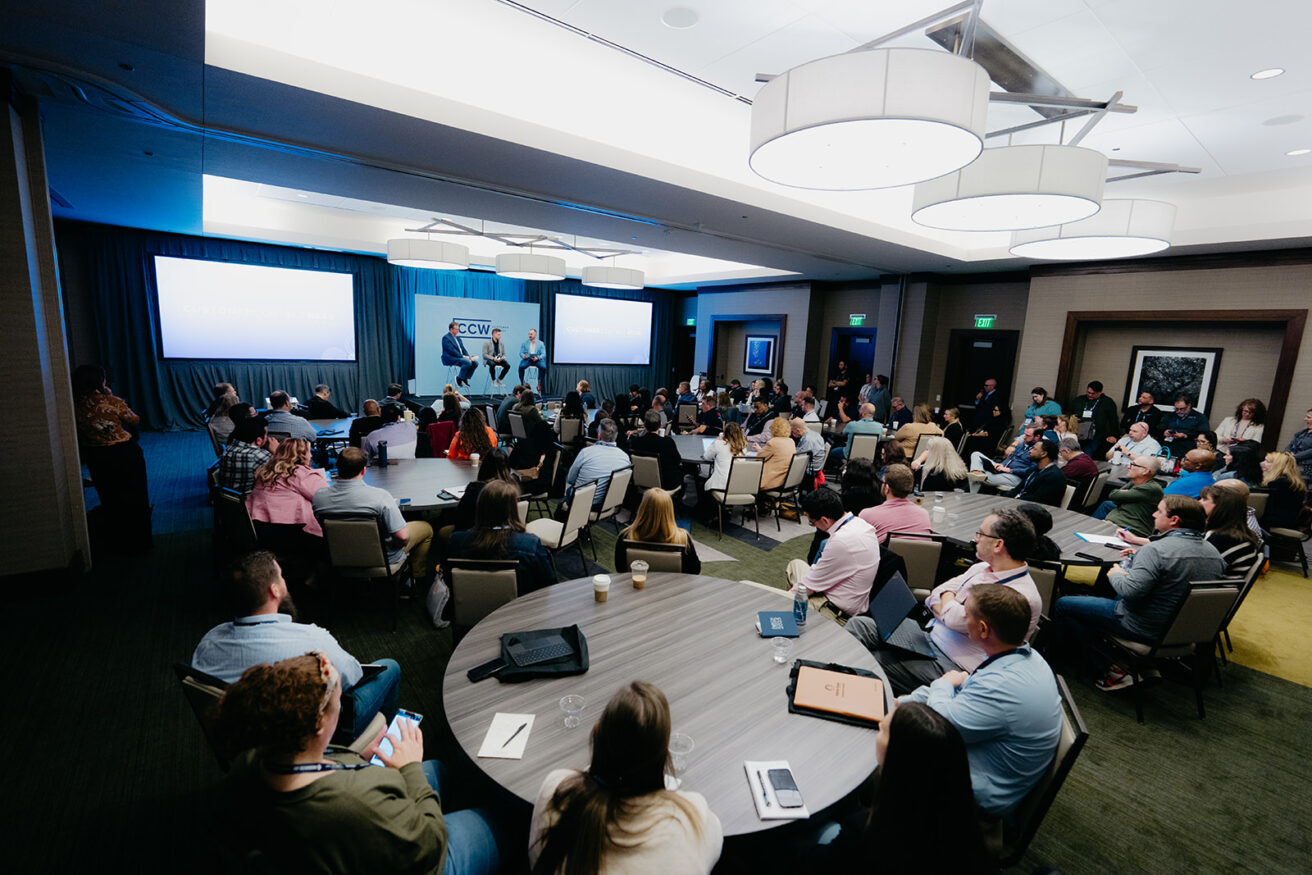
These sessions from Customer Contact Week (CCW) Nashville 2025 highlight a pivotal shift from viewing AI as a “cost-cutting tool” to a “humanity-enabling partner.” From healthcare’s patient-first digital evolution to Bill Strickland’s powerful philosophy on dignity, the event focused on bridging the gap between high-tech efficiency and meaningful connection.
Key Takeaways
1. Reimagining CX: Healthcare as the North Star
- Patient-Centric Shifts: Healthcare is moving from provider-driven to patient-focused models, using digital tools like telemedicine and wearables to engage patients in their own care outcomes.
- The Access Parity: Modern front-door strategies prioritize convenience; for example, AdventHealth uses a single platform to ensure a consistent patient experience across all 95% of its telephony interactions.
- Efficiency Meets Empathy: AI tools are now used to triage calls, reducing emergency hotline volume and automating complex scheduling, which can increase revenue by up to 24% by minimizing no-shows.
2. Generative AI: From Hype to Governance
- The Trust Deficit: Only 15% of customers currently trust AI-powered self-service, a decline from last year, primarily due to lack of personalization and transparency.
- “Both/And” Mindset: Successful leaders move away from “Agent vs. Automation” binary thinking, instead using AI to handle rote data analysis while empowering humans to focus on “moments that matter”.
- Human-in-the-Loop: Implementing “Agent Assist” allows technology to summarize calls and push notes to EHR systems, freeing agents to provide real-time empathy without the distraction of manual documentation.
3. Keynote: Making the Impossible Possible
- Environment Drives Behavior: Bill Strickland, founder of Bidwell Training Center, proved that building world-class, light-filled environments for marginalized communities transforms “at-risk” students into world-class professionals.
- The ROI of Hope: Investing in vocational training costs roughly $17,000/year compared to $45,000/year for incarceration, offering a powerful economic case for human-centric investment.
Read the Complete Transcript
SPEAKER 4
Welcome to CCW Nashville. Please welcome to The stage your host Rosanne Rogers.
Unknown
Hey. Hi, everybody. How’s it going? Do we have.
SPEAKER 2
A late night last night in downtown Nashville or what? I was like, we need more coffee. Whoo! Show of hands. Who want. I went to Garth Brooks and Tricia Yearwood’s place last night. Friends in low places. Yeah. Pretty cool. Pretty cool. Garth was actually inducted in the Country Music Hall of Fame in 2012. His wife, Trisha, hasn’t been yet, but he’s always saying she’s the more talented one.
SPEAKER 2
So how is that possible? Right. If you ever see them in a show that he’ll always say that he’s always gracious with his wife. So I’m glad you all had a great time last night. I actually live here in Nashville. So welcome to what’s also called the Music City. There’s a lot of energy, and you all brought even more with us today.
SPEAKER 2
So thanks so much for being here. And we’re excited because it’s going to be a jam packed great morning and it’s only 805 right? I mean hello. I know you might need more coffee, but don’t worry, there’ll be plenty of time for that. And plenty of time to mix and mingle and network and everything. But we’re glad you’re here.
SPEAKER 2
First of all, you know who you are, right? Everybody know who they are. Okay, just just making sure. Because I remember one time during an interview with Robert Plant, he asked me who I was, and I was so Star Trek struck. I didn’t know my name. So I’m just making sure everybody has a name. If you don’t know your name, you have that.
SPEAKER 2
You have your badge, right? You know who you are, what you’re doing here and how your job is changing. You might know the first answer to the first two questions, but the last one, there might be a question mark there that you may need the answers to. How is your job changing? Especially when what’s happening right now? Right.
SPEAKER 2
Each and every one of you play an integral role when it comes to what you do and how you do it. For customer contact, as well as the standards exceptional, exceptional experiences, whether it’s for your customers or maybe it’s for the team that you’re working on, the team you’re part of. We all are team players in some aspects, but we’re leaders.
SPEAKER 2
Or maybe we’re followers. Also, you’re leading the charge and major transformations and how you actually conduct customer care. Understanding the different landscape in the industry as well as compared to this, this time two years ago. Think about what’s changed in just two years and how your role may has changed in your industry or in our company. So I want to talk a little bit about the expo hall is doesn’t just include 70 actual exhibitors.
SPEAKER 2
This is your one shop stop for everything. As far as customer contact is concerned, all in one place. Can you believe it? Just one place. 70 exhibitors. One place, one time. Also, this should be your chance to keep one conversation away from gaining true competitive advantage and driving the impact to your agents. And that’s what’s so important, right?
SPEAKER 2
That’s what we’re all here. We want to gain knowledge. Of course you want to be entertained. Just slightly a little bit right too. But part of it is gaining that knowledge. All right. Everybody’s got their phones out. I know you do. I know you’re really paying attention to me. I know that right now. Your phones need to be out because there is a reason for that.
SPEAKER 2
No, I don’t want you to take pictures of me on stage. I want to make sure. But if somebody does, that would be great. I will give you my number. Or you have, like, the mobile app, and you could send it to me so everybody knows where I was today. Your mobile app. Does everyone have the camp events app?
SPEAKER 2
Yes. Okay. I just want to make sure. Because yesterday, Linda and I saw each other in the hallway. And. Linda, if you’re out there, I’m not trying to embarrass you, but she was in Vegas. She had all the events for Vegas, and maybe she really wanted to be in Vegas, but were in Nashville. So because I know you had a late, like, late night last night, but we are here in Nashville, so you need to make sure that you have the CMA app because it is your hub for the next several days.
SPEAKER 2
This is the same CCW community. It has access to everything your full agenda, where you should be, where you want to be perhaps, and also the expo hall map and much, much more. Now, if you have any questions, what are you going to do? You’re not going to call Ghostbusters, but what you are going to do is you’re going to go to the CC concierge line.
SPEAKER 2
It’s available to help and answer all your questions 24 over seven. It is powered by Observe AI and the CC double. You can see line, like I said, has anything and everything that you need and want to know. Or maybe just how a question is. Let’s right now take your attention to the screen and let’s learn a little bit more about it.
SPEAKER 2
So so you’re going to always.
Unknown
Hit the money.
SPEAKER 2
Observe. I thank you so much for doing this. We need you there also at booth 217. Also this is interesting. If you call this line you to talk to Dolly, not Dolly Parton of course, but your AI person, your, operator, I should say, Dolly is 725525 8535 seven call. So if you need any help, but also see if you have any questions.
SPEAKER 2
Just like we had yesterday with Linda and being in the wrong place on the app and not here, we just went to the registration desk and everybody at the registration desk can actually help you with all your questions. Okay, everyone’s got their badges, right? We got our badges, these great badges. Remember, we know who we are. We can find that.
SPEAKER 2
But that’s not let’s play for these click badges are amazing for many, many, many reasons. Because first of all, in a few minutes before each session starts, it’s going to blink blue. This is your blink bridge of knowledge or ready to learn everybody. Blue. We got blue going. Mine’s blue, we got blue. We’re ready to learn. We’re ready to get started with our sessions.
SPEAKER 2
Now we move on. If you’re going to a networking session is going to blink magenta a little bit of a hint of pink. Everyone’s turning pink because this is time. When it’s pink, it means it’s time to mix and mingle. So blue is knowledge and learning. Pink is mix and mingle. Got it. So it’s going. And then the other cool is okay everybody put your badge the person to your left or to your right and put it up next to each other.
SPEAKER 2
Because with the magic a little bit of sprinkle little country music magic here and Bluetooth, you’re going to be able to connect with your neighbor and get contacts. And not only that you’re like, okay, where are these contacts going to go? I like it’s going to be on your mobile app, which everybody has already downloaded, right? So that way your badge does triple duty, right?
SPEAKER 2
Networking sessions, contacts. So don’t lose it okay. That’s the other thing. Don’t lose your badge. Also, the demo drive I wanna tell you about a little bit about the demo drive. And the demo drive is when you go to the expo hall, number 70 exhibitors. Who’s going to be the champion and getting all 70. If you click more than ten sponsors, when you’re in the exhibit hall, you’re going to be it.
SPEAKER 2
Your name is going to be into the drawing for the CCW prize package. And that will be given out this Friday at lunch and the CMP lounge so you can be eligible. So everyone’s going to get at least ten, right. Everybody can do that right? Okay. We’ll wrap it up. Just a few things real quick before we get to the panels is some highlights.
SPEAKER 2
You’re going to meet some amazing experts. I have so much great information for you over the next couple of days. Your jam packed with panelists, you have keynote speakers. You get the chance to mingle with like minded peers. You can talk to, see what they’re doing, and they’re into you, by the way. Also networking opportunities, not just here and in the Expo hall, but also in downtown Nashville.
SPEAKER 2
You know, Post Malone just opened his restaurant last week, so you might run into him. He was actually at Nordstrom’s last week. I saw him shopping, believe it or not. So networking is important, right? And don’t forget to use your badge as well. So why don’t we get the show started? Right. You ready? Come on everybody.
SPEAKER 4
Up next reimagining. See what every industry can learn from health care’s transformation. Please welcome to the stage Michael Guerrero Jen Edwards and Enda Murphy.
SPEAKER 2
Hey, Mike, all.
SPEAKER 2
Jennifer, how are you?
SPEAKER 2
Thanks. You love Jennifer’s bright jacket is also breast cancer awareness Month. Jennifer, thank you for being on point today. Absolutely. With our theme. This is exciting that you all are here because so much and every industry is facing what health care is today. And let’s just like kind of just kind of recap when we kind of set the stage up for all of you of kind of what we’re going to talk about that’s relevant, what you’re doing.
SPEAKER 2
And also in everyone’s industry here, it’s amazing to me, but it’s fascinating how the challenges of health care balancing people, as well as technology, building trust as well as improving access, I think that’s super key. And personalizing experiences, right? Because people don’t want to be a number. I think that’s the biggest thing in healthcare. People say, I feel like number, I’m a person and I want you to pay attention to me.
SPEAKER 2
And it’s hard to navigate in all the industries, whether you’re in health care, retail, hotel, motel doesn’t really matter. I think it’s what’s what’s interesting today in today’s conversation, we’re going to get across is the health care in drawing parallels with the financial services retail and beyond and patient and supporting customers, as well as principles that are true with empathy and innovation.
SPEAKER 2
As you all know, each network it must go hand in hand, right? Must go hand in hand. So why don’t, why don’t we get started and you want to start off, I’m going to ask you a question. Don’t worry. Okay? I’m not saying, you know, because he’s so well versed and well educated on everything is. We were just talking about this earlier.
SPEAKER 2
Our conversation is, is have you seen a shift when it comes to provider driven, patient driven experiences and how they play out? What parallels do you think in other industries that we can all learn from?
SPEAKER 6
Yeah, sure. We’re absolutely seeing the drive from more of a provider to a patient centric or patient focused and provision services that’s being driven by a number of different changing factors. There’s a whole change in the expectations from patients today. We also see significant technology improvements making it possible. And then we have to transition over to value based care services as well.
SPEAKER 6
So we can double click on those a little bit. So if we talk about changing expectations for patients right patients want to be a lot more engaged to want to be have a lot more input into the decision making process around a whole a program of care. I think that’s really, really important. And the access to healthcare information is enabling that.
SPEAKER 6
We’ve got digital healthcare tools now where we have telemedicine, we’ve got enhanced electric electronic health records. We’ve got, you know, wearable devices that are enabling patients to be a lot more engaged and a lot more proactive in terms of how they they feel that they’re engaged in the delivering care. And I think it’s really, really important that, you know, when we move towards value based care models, those technologies are enabling that, because when we when we move to value based care, we’re really looking at, you know, a changing from what was originally a fee based service in healthcare to an outcomes or quality based service.
SPEAKER 6
And, you know, having patients engaged in their whole healthcare plan is critical to be able to deliver the right healthcare outcomes and increase patient satisfaction.
SPEAKER 2
And curious, what’s been the response that you’ve gotten? Was it was there a learning curve at all? Was there was it immediate? Because everybody wants to kind of know that if it’s if it’s spontaneous or it just takes a little while to actually engage in this.
SPEAKER 6
It takes a while. Because, you know, when you’re delivering healthcare, you’re delivering health care from everybody, from a six year old to 96 year old. So they’re different modalities within healthcare that are transitioning quicker than others. And but I think that, you know, people now have access to devices at a better cost point to me, you know, cell phones with full data packages and so forth are ubiquitous.
SPEAKER 6
And I think that’s been one of the key driver to give people the mechanism to be able to access their health care portals, to be able to communicate in different channels. But more important, at a time that’s convenient for them. And I think convenience is something that, you know, we’ve talked about a little bit later, but convenience is really, really important.
SPEAKER 6
I mean, you no longer have to get in a car, make an appointment, drive down to your your local GP to get some sort of healthcare advice. I mean, it’s online, it’s available. It doesn’t need to be person to person. And still for those providers to be able to provide very focused.
SPEAKER 2
We are. So right now you can actually check in prior to going to your appointment on your phone. Right? So it is very much needed and this is a great transition to you, Michael. We talk about here as you modernize access, how can you create this same sense of empowerment and simplify for patterns? How can you actually do that together.
SPEAKER 7
And so I’ll answer that in two different ways. Okay. We’ve from a telephony channel which is our biggest front door, probably 9,095% of our interactions are happening over the phone. We’ve been able to standardize across all of our ambulatory and, urgent care practices, on one single platform, one same kind of IVR, same treatment.
SPEAKER 7
So it matter where the patient is calling, whether they’re calling their primary care, their specialist, they’re hearing the same voice to see the hearing. AdventHealth, you mentioned it a little earlier. Health care is a deeply personal thing. Patients don’t want to feel like a number. Our catch phrases feel whole. What? What makes me feel whole is different from what makes me smash face.
SPEAKER 2
I like that,
SPEAKER 7
So how do we. How do we continue that feel? Whole. Right. Feeling for our patients. So our first step was let’s get everybody on the same platform feeling the same way as they’re entering into our doors. And second one is through the app. So you just mentioned patients can register through the app. They can check in. Well we’ve got the benefit where we have developers inside of our inside of our organization.
SPEAKER 7
And we’ve developed our own Avid Health app that’s connected to our H.R. And actually gives control and personalization of the patient’s care to them, right in that random palm of their hands.
SPEAKER 2
Well, can you believe that? I mean, that didn’t happen. I mean, come on, we’re not that old. But I mean, a lot has happened and shared such a short amount of time with technology. Jennifer, across the industries, when you work with, where do you see these customer experiences showing up the most? What lessons are the organizations outside of health care can we take away from all this?
SPEAKER 3
So I think there’s a lot that can be taken from retail. And certainly finance is also experiencing the same thing. Again, we want to be seen as a whole person, when we’re having these conversations. But retail’s an interesting one. It’s moved fast. And at the same time, I’ve just recently been on a panel with a bunch of Gen Zers, so that’s always interesting, right?
SPEAKER 3
But they will tell you that, you know, at the end of the day, our research has it like 72% of people are like open to having, virtual, you know, working with AI, but they love the option to have an opt out to go to a person. So I think it’s really about what we see in the industry is like, for example, some of our new, new award finalist, like Aldo group, right?
SPEAKER 3
They’re taking and they are freeing up time, using agent assist and coaching so that, even their conversation. I mean, we’re talking about shoes, right? That people can get to somebody to talk to about either, my shoes on time, are they not? And they can also opt in and they have the option. So it’s about meeting your customers where they are at that time.
SPEAKER 3
In financial services it’s the same thing, right? We’ve got companies that are, are like looking at how are we automating, where are we automating, meeting the customers, where they are at the point that they want to be? That is what’s important. So companies like Ocean’s, first Bank are really, you know, looking at taking and putting coaching in place for their teams.
SPEAKER 3
I know everybody talks about agents. I’m going to talk about teams. So if I say teams, I mean agents, and empowering them so that they’re not doing the big transactional things, they’re actually focused more on the whole person that they are dealing with and giving, helping them with the outcome they need. And all this is underpinned by data and and putting the right information in front of the team member that’s serving the customer, or whether that’s a virtual team member or physical team member at the time that they need it.
SPEAKER 2
I think Jennifer just set up Michael for his next question because it’s he’s awesome. Did they rehearse this at all? Because they’re really, really good. Really good. That’s the that’s the is that we all want to know is there’s a lot of discussion about how do you balance automation with empathy asset empathy automation. How do you do that.
SPEAKER 2
How are you using a I’m Michael and on automation enhancing the experience of the human experience rather than say replacing it. Because I think that’s the biggest fear for all of us. And mine included, is are we going to be replaced by a. Yeah, right.
SPEAKER 7
Right. So I want to preface with AdventHealth is still in the journey, probably like everyone else. Yes. We’re still trying to figure out how and the right places of where to put AI. But again, healthcare being a deeply personal, industry, you don’t want to add additional friction points. Healthcare is full of friction points. You don’t want to add more.
SPEAKER 7
And AI has a real strong opportunity to, release some of those friction points, but it could potentially add some more as well. So what we’re trying to find is a nice balance for our patients and our consumers. That will allow them to be empowered to do things on their own without actually having to talk to a human.
SPEAKER 7
Things very simple. Like, I want to schedule an appointment, right? I mean, you don’t have to talk to somebody. You can if you want to. So we also have a, a concept in our organization where we don’t want to contain the patient inside of an IVR if they don’t want to be contained. Right. So it is to your point, it’s meeting the patient or meeting the consumer where they want to be met.
SPEAKER 7
If they are savvy enough, they want to be using the, self-service IVR. Absolutely. They can go ahead and do that, or they can see the magic words and have the right to a human. So we we are giving the patient and the consumer that option, again, with trying to find the right balance of not to create additional friction points in their journey in time.
SPEAKER 2
Right. Everyone’s time is of the essence. So you’re not only trying to do that as far as being more empathetic, sympathetic to what their needs are. But then also you don’t want to have them on the phone for 25 minutes just trying to make an appointment or trying to get to something that they need to. Right. So there’s that balance.
SPEAKER 2
And, you’ve actually worked with five nine across two different companies. How has AI evolved in this process and where does it deliver the most value without losing that human touch?
SPEAKER 8
Okay.
SPEAKER 6
So I it’s been around for a long time. I mean, I remember doing AI courses when I was in college, and I’m not even going to mention that year, but it’s only in the last 5 to 10 years that has really become affordable, which is really growing its its use across the consumer base, market and, you know, we’ve transitioned, let’s say, in the last five years, we’ve transitioned from using AI for just basic, you know, patient inquiries to now being able to solve some pretty complex questions and being able to provide 24/7 services that were previously not available.
SPEAKER 6
Right. So remember that any time that you provide a service within AI, it’s now 24 over seven, which can be very, very convenient because now you’re giving services to patients that they otherwise only had Monday to Friday, 9 to 5. And I think, you know, when you look at the type of technologies that that using and the type of uses, I’ll give you a couple of examples where, you know, AI is is really changing in terms of front end triage and being able to route patients to more quickly to the best care provider for them.
SPEAKER 6
So it, for example, in the UK has been able to significantly reduce the number of, you know, emergency calls to your emergency hotline number by using AI. But, you know, over the past couple of years, mean my team built a, a system for patient scheduling, patient scheduling is actually a very, very complex process. And we partnered with five nine, on the AI provided by five nine to be able to build an automated, very efficient model for automatically being able to contact patients, being able to schedule at the best possible and convenient time at a location that’s more suited for them.
SPEAKER 6
But more importantly, as we as AI is building up that data on the patient, it’s also generating a propensity to cancel or, you know, and in healthcare as one and no show articulate cancellation. It’s like an aircraft taking off with an empty seat as revenue. You don’t get back. So using AI to be able to pull forward patients, to be able to predict if a patient is likely not to show, we are looking at, you know, data like demographics, history, we’ve I even looks at the weather forecast to determine whether what the weather is going to be like on the appointment date and actually generates a score and in some cases actually double box appointments
SPEAKER 6
or arranges the schedule accordingly. Or what it is also doing is doing a lot more outreach, automatic outreach to the patient in terms of text and phone calls and reminders, in some cases even providing automated transport services for the patient as well. So those type of services are increasingly useful to accommodate that in that system alone increased the overall revenue of our company by 24% overnight.
SPEAKER 2
That’s incredible. Yes. Because yes, time efficiency and convenience. Right. And being able because you don’t want that person to come to their point already stressed out. That’s not what the that’s not what the idea is. We’re here to help you. We’re here not to hinder you.
SPEAKER 6
Yeah. And in most cases it’s really getting the balance right between which parts of the process do you automate with AI, and at which point do you actually transfer the patient over to talk to to a human agent? And what that does is it frees up the human agents to be able to be a lot more specific in those complex healthcare questions and be a lot more focused on desired outcomes for the patient, rather than doing, insurance eligibility and verification address and, authentication and validation of the patients themselves.
SPEAKER 2
That’s incredible. Jennifer, what are some examples from other sectors, do you think, where companies have been successful in balancing AI with the human interaction? Can you give us some?
SPEAKER 3
Yes. So I’m going to give you a actually a parallel to what. And Oh wonderful. So we have a, customer called the Ivy and they are a very high end, they’re UK based, but they also have, restaurants all over the world. And similar to what end is saying about, like, an empty table and a cancellation on a reservation for a kind of luxury, experience, you know, that’s lost revenue.
SPEAKER 3
So the Ivy did something very similar, right? They’re using, AI and automation to predict or to understand where their reservations may be falling off and getting back in touch with those particular customers that might have been on the waitlist to ensure that they’re, you know, having a full restaurant and, and those discussions. So I actually I think that’s like one of my favorite parallels where you’re taking from what, you know, is happening in healthcare.
SPEAKER 3
And the same thing is happening in, in a company. And they’re thinking about how are they going to leverage this technology for the right experience, better experience for the customers, and to enhance the outcomes for the business itself. So that’s my you know, I think that’s a really exceptional one. I mean, I just kind of go with that one.
SPEAKER 2
I’m glad that you did. Is that Michael? Do you have anything to add as far as that’s concerned? And what she what Jennifer was kind of just reinforcing the examples of how great they are and how it’s working.
SPEAKER 7
No, I think those examples are fantastic. I think I want to add on to, what Enda was saying earlier is, you know, as, as everybody in the audience is going through their AI journey, I think it’s important to realize when AI is a good fit and when it is not a good fit, and not to be afraid to say this is not a good fit.
SPEAKER 7
Let’s let’s find a different way of doing things. Again, you don’t want to create friction for patients or consumers or just, you know, just regular customers. You just don’t be afraid to pilot. Don’t be afraid to test things out and walk away and say, this is not it. And we’ll come back to it when it’s maybe when it’s ready.
SPEAKER 3
I think sometimes it’s like under the covers instead. It might not actually be the answer for upfront, but it certainly underneath, you know, it, it can help and support. And really it’s about like creating productivity, freeing up time, those mindless sometimes transactions that actually get in the way of allowing organizations and their teams to meet the customer where they are because they’re bogged down in, you know, you know, there is a lot of for health care, for financial services.
SPEAKER 3
There’s a lot of, obviously policy that needs to be carried along with it. And there’s places where I can help with that. And and then it frees up the teams. Right. So things like agencies certainly, can help. They’re taking the notes and, and then summarizing it. That’s really important because that gives back time to those, the team members.
SPEAKER 2
What kind of goes through what we’re going to do next is omnichannel and also connected journeys. Right. And and I think patients what we talked about earlier is they want seamless experiences. We don’t want to be hassles. I mean, I love that word. The use friction. How are both creating the connection experiences feeling effortless negative. Some examples or anything that you want to add to that.
SPEAKER 6
In terms of, you know, connectivity options for for patients are really the really critical, you know, ten years ago, the only way we had communication was pick up the telephone, make a call today. That’s not the predominant way people want to communicate with their healthcare providers and other services. And being able to provide, you know, back end services that are true through social media, true true, direct line communications and patient portals, etc. is really driving a different level of interaction.
SPEAKER 6
Is driving a more positive level of interaction and striving for better outcomes on the healthcare side.
SPEAKER 2
Jennifer, are you seeing what kind of trends are you seeing in the omni channel? Yeah, Spago.
SPEAKER 3
I love Mason and company is they’re a retailer. And I love their story because, Mason company still receives 3000 checks. I want to say, like, in, like a month. So people are still they are, online retail, digital company. They also have catalogs and whatnot. And so therefore, and they’re over 100 years old. And so therefore they’re, the generations that are consuming their, products are different.
SPEAKER 3
So they went on this journey where they, they did not want to alienate their boomers and beyond. Right. Frankly. Right. Okay. Way to go. Yeah. Right. I mean, I mean, what’s the alternative to old. I’m I’m not interested.
SPEAKER 2
I don’t know about you guys over and over again, but. Yeah.
SPEAKER 3
So at any rate, the point here is that they took a very thoughtful journey about where and how, and they looked at obviously the demographics, and they engaged both their customers and their teams in moving through this process. And they have, you know, they recently, you know, they’re some of the best self-service. And they have had major adoption into, you know, the online channels and the right and in the right places and at the right point.
SPEAKER 3
And I think they’ve also seen, you know, generationally people come along and it has worked out really well. Additionally, their team members have you know, their attrition has really gone down as well.
SPEAKER 2
Their thought provoking. I love the fact that they put a lot of thought and effort into this. Michael, before we move on to another subject, anything you want to add to the conversation right now?
SPEAKER 7
Yeah. So to to to end this point, we’ve seen a huge adoption in, digital channel, messaging. Our patients love to be able to message their providers directly through our application. The phone is still our, our largest front door, but we’re seeing, the swing start to go towards, direct patient messaging through the application.
SPEAKER 7
We do have some white glove service that, patients actually love to use. The chat, the chat channel. Just be able to quickly send a message. I need to do this. I need to do that. I need to schedule appointment, help me out. And we’re there for them. So we’re starting to see the swing. But the the front door is still predominantly the phone.
SPEAKER 2
I think it’s really relevant because a lot of us, you know, in the room could be like the sandwich generation where you’re not only taking care of your health needs for your children and then you have your parents. So what you just said, it’s so important because you’re multitasking, and then you also have that thing called work too, right?
SPEAKER 2
And so you really need to make sure. But it’s also to you I think this is a good transition to where we go to next is trust and transparency go hand in hand. And Michael trust is a massive thing I think across the board for all of our industries. And you know, we we want to really as you’ll see this and all the panels and all the discussions that’s going to be part of the program, privacy, security, delivering promises.
SPEAKER 2
And also how do you build and maintain that trust with customers and technology being a part of this entire relationship? Right.
SPEAKER 7
So trust and security in healthcare are what I consider table stakes. You, you you walk into a physician’s practice or hospital. At no point in time should the patient ever be worried about is my data safe? Is is my information going to be leaked out? I’m like, the patient is there to be taken care of? That is our job, right?
SPEAKER 7
So that’s why I consider that as table stakes. Now we are absolutely in full transparency around how we’re how we are securing our patients data through high trust, through nest, through all these different other regulatory, report outs that we provide openly to our patients. Right. But more importantly, the technology has to work. If the technology does not work, then you start to sow doubt into the patient’s minds of, all right, well, if this technology doesn’t work, then what else is not working?
SPEAKER 2
I’m not safe, right?
SPEAKER 7
Right. I don’t feel safe. Right. And keep me safe is actually one of our models inside of AdventHealth. We have to keep our patients safe. So technology has to work, in order for us to make sure that, that our patients do not feel like they or their data is not being secured, or exposed.
SPEAKER 2
Into what would you say about that as far as follow up?
SPEAKER 6
Yes. So the the one thing about the bad actors of today, they are using AI to try to breach the security and data integrity of all companies around the world, and the rate of attack and the rate of increase of of, of the volume of attacks is, is on a hockey stick. It’s, it’s it’s going nonlinear. And the ability to use AI to countermand AI is the only way forward.
SPEAKER 6
But also introducing AI into the overall processes has generated a different level of security and and concerns about data privacy. So, you know, in order for a, a chat bot to be able to authenticate and validate a patient or to authenticate the patient. So they need access to an electronic health record and other databases, right. You’ve now opened up the possibility of security holes within the AI world to that data, which wasn’t there before.
SPEAKER 6
So introducing AI is introducing further risk, which means that we have to double down and have different levels of governance and control over AI frameworks and AI security than we’ve ever had before. So I think it it’s it has changed the way, you know, CISOs and other security experts have actually locked in doing that has changed the role of it and of the governance teams within healthcare and other organizations as well.
SPEAKER 2
Well, I think it’s it’s good to move on to employee experience and connection. Right. We were just talking about that. And Jen, Jennifer, when it comes to ways that you’ve seen companies use ECS initiatives to improve customers, how lessons from health care can be applied to other, other places and everywhere else.
SPEAKER 3
Yeah. Big question. That’s a big question. I’m going to give a plug to, Cordell Miles, who is here from IEA. He’ll be speaking later. He and, Millie mcEntire lead the teams over there, and they are perhaps one of the best examples of how you create great customer experience through building, an exceptional team. You know, I’ve spent time with, Cordell and Millie and the team out there, and they, you know, part of what Millie and Cordell do with the team is that they are part of the adoption, right?
SPEAKER 3
They’re not handed this technology and and said, here, here you go. Use it. They are part of how we get there. They’re the experts. And we also hear this from other, customers. I thank you, Chantelle. Love is here as well. She’s another exceptional leader when it comes to that. Her agents are not agents. They are champions. And again, she and her team, they bring together the agents with the technology.
SPEAKER 3
And as you’re going through adoption, and they understand uniquely that these team members are going to be the face of your brand. They drive revenue and they are there to create great outcomes. And if they are enabled with the right, set of technology that lets them get to the heart of what they’re supposed to do, the empathy, they get there quicker.
SPEAKER 2
And now how do you empower your teams to deliver better acts?
SPEAKER 6
So it’s really about looking looking at what is the business problem you’re trying to solve, and then focusing on that and making sure that you have the metrics from before and afterwards. You can’t measure it, you can’t improve it. Somebody said that years ago and it’s still still still valid today. So you need to know what needle you’re trying to move, how to how to move the ball down the field in the right direction and make sure you’re actually getting there.
SPEAKER 6
I think that’s key. And you know, the number one rule on using AI. And Jonathan Rosenberg, the CTO for four, five, nine has as a rule. And his first goal is what is the business problem? Focus on it and measure. I think that’s the most important thing.
SPEAKER 2
It’s changing. Michael.
SPEAKER 7
So I’ll give two quick examples. And going back to like automating like the easy stuff. Right. Are implementing Agent assist is has transformed our contact center for the agents that are using it is it allows the agents to actually provide the level of empathy to the to the patient, to the consumer that’s on the phone without having to worry of like, all right, I got to take notes.
SPEAKER 7
You know, while I’m on the call and I got a Russian, I’m sorry. What did you say? But we don’t have to worry about that anymore. The call is summarized, and it’s pushed automatically into our HR. So the the agent is actually able to, provide the empathy necessary for the, for the patient. And the second one is actually unrelated to the phones, but so we’ve implemented, automated transcription inside of a provider practices.
SPEAKER 7
So if a provider is speaking with a patient, they no longer have to worry about. All right. I got to take my notes or I got to transcribe these notes. And later on in the, you know, when I get home now, they just put a little device on the on the table, and now they can have a conversation.
SPEAKER 7
And all of that is transcribed. There is just the relevant medical information automatically pushed. So it again, it creates that personalization, that empathy for the patient. In the room.
SPEAKER 2
Wow. I learned a lot. Did y’all learn a lot. This is pretty amazing. There’s a lot of takeaways from this. We could keep this conversation going but unfortunately we have other panels. But the good thing is we can keep the conversation going because you will be in the expo hall at these 406. And I think if you have any questions about anything we talked about, please come see all three.
SPEAKER 2
They’re so intelligent. They know what they’re talking about. They they’re driving the new standard. I think that this is there’s so many takeaways from technology, financial services, retail and just balancing mobility with transparency and everything that goes with this. And Michael, Jennifer, thank you all so very much for this conversation. It was very compelling and I think we all learned a lot.
SPEAKER 2
Those blue buttons were right. And I said, we’re ready to learn and we learn. Thank you all so much. Thank you, thank you, thank you.
SPEAKER 4
Up next, how generative AI hits the right note for contact centers. Please welcome to the stage Chris Arnold Jennifer Hanson and Brian Cantor.
SPEAKER 2
And your, How’s it going? You like three?
Unknown
Nashville. I’m Jen and Brian. Brian ready to rock and roll. Now.
SPEAKER 2
I had to say it. I had to say it. Y’all doing okay?
SPEAKER 8
Yeah. Great. As you said, ready to rock and roll. So it’s okay to be here.
SPEAKER 2
Oh, I think yeah. Brian was like, I can totally like, I can you can you can we can switch places. No, I can’t because I don’t know the stuff. Yeah, I said that because this is not it. We’re talking about speed and efficiency that matters. But trust is the melody. Of course, that kind of goes with where we are in Nashville.
SPEAKER 2
The melody of Everything to remember today, you know, with generative AI and the trends, you know, forming contact information and centers and leading organizations. It’s the balance, right? What’s this balance going to look like for all of us? And I think we need to talk about the fact that, again, we we we we’ve touched on it earlier with in our last panel with humans and AI and where that balance really takes place.
SPEAKER 2
Brian, let me begin with you and talk about just kind of like leading us off on that, that we’re all talking about here in the discussion of trust and governance. You know, I’ll say that word very often, do you? You don’t walk around and go, let’s talk about this.
SPEAKER 8
Again every day, actually for me. But yeah.
SPEAKER 2
I kind of threw you that curve. Yeah, yeah. But why don’t you lead us off on what? What? This is kind of like setting the stage for us.
SPEAKER 8
Yeah. So trust is so essential in today’s world. In an era where there’s so many options for interacting with brands, so many ways to buy a product. If you want to go beyond the transaction, you want to make that connection. That’s where trust is the key driver. Now at digital, we think of trust across three dimensions. First of all, can you trust the brand to deliver what they promise?
SPEAKER 8
Is the experience going to be what they said it was going to be? Is the product going to communicate the right value? The next step is can you trust them to know you? So is this not just a generic experience, but instead one that’s built for you, designed with your needs and your intentions and your sentiment in mind?
SPEAKER 8
And finally, can you trust them to protect you? So when you interact with that brand and you share your data, is it going to be safe, secure? Are they going to respect you? And unfortunately, right now I and according to our research and probably according to many people’s own observations, it’s failure on all three counts. The reality is only 15% of customers trust AI powered self service right now.
SPEAKER 8
And that’s actually down from last year. So think of all the advances in AI, all the amazing tech, all the familiarity, and we’re moving in the wrong direction. And the reason is clear right now, the outcomes we’re delivering are not what people are looking for. Their fancy FAQ pages, their reiterating policy. It’s not giving customers what they need.
SPEAKER 8
Secondly, it certainly doesn’t feel personalized. I don’t know how many people have this amazing bot or AI experience. It feels like it’s talking to a best friend. I feel like I’m talking to exactly what it is a bot, a robot. And then finally we know that data actually right now, and privacy and security is the number one way to differentiate when it comes to the power of your AI implementation.
SPEAKER 8
So what this means ultimately here is that we have to start to think about elevating AI in every area, making the experience better, making it more personalized, but most importantly, making it more transparent. When is AI coming into play? What should customers expect? How can they evaluate it? Why should they trust that the outcome they’re getting here is just as relevant, just as valuable, and just as a consistent with the brand as talking to a person.
SPEAKER 8
Because remember days ago where they were judging you based on, hey, if you had a root agent, they wouldn’t do business with you or you had a messy storefront. Now they’re judging you based on that I touchpoint. And if that doesn’t live up to those standards, you’re going to have a problem. Governance comes into play.
SPEAKER 2
That is so well said. Chris. What are structures or safeguards that you’ve seen that work best and ensure that AI is safe, of course, and transparent when it’s an audible, yeah. How do you do that?
SPEAKER 8
I would say you have to always look at people and process along with the technology. So don’t don’t get trapped into only evaluating the technology because people in process matter. Even though we’re talking a lot about automation, humans are absolutely a part of this equation. But in terms of choosing the right technology, because there’s great marketing out there.
SPEAKER 8
And so I don’t envy the buyers that are out there trying to evaluate all of the great marketing, all of the various solutions. AI startups are popping up all over the place. So the AI system itself needs to have the right components to address all of the things that Brian was just talking about. So you need to have observability for transparency.
SPEAKER 8
You need to be able to see what is this customer’s experience going to be in, not just happy path. So you have to be able to get beyond the demo with various suppliers, and you have to have that observer, a observability that you can simulate in a safe environment to really understand what are the friction points. And it’s not just hallucinations.
SPEAKER 8
You know, we hear a lot about AI hallucinating. You also have to take into account biases. And is your AI solution able to account for the inherent bias that may be coming from the data? And so there’s a lot of considerations. And I’m of the mindset that fear and trust can’t coexist. So for us to sort of grow and evolve beyond this current state of fear, we have to develop solutions that can be trusted.
SPEAKER 8
And that’s going to come by way of being able to simulate the customer experience, observe it, learn and iterate.
SPEAKER 2
Well, this is good for Jennifer that can I it’s a great transition because Jennifer, how do you embed trust and governance into a AI? You know, as far as adoption from day one? Yeah. Well, many of you know, my career has been built in service and leading people, right. So they might think, why are you on an AI panel?
SPEAKER 2
You’re all about leading people in service centers. And I would say that it still starts with people, right? We have to make intentional decisions about where we’re using people and where we’re using AI. Trust and governance is legislative. You know, it’s the technology that powers the AI, but it’s also about being thoughtful about your governance structures, and the roles and the responsibilities and the place that you want to play.
SPEAKER 2
We’re not all going to start, you know, with massively, predictive, fully automated centers tomorrow. Some of us have to start at a place of, small automation in support of our customer or in support of our agent and build. So I’m a big believer in testing, learning, iterating and then growing as you learn. And I think that’s really important.
SPEAKER 2
People want to jump in headfirst. You don’t want awards for being fast with new technology. So be smart. And that’s where I would come from. I think as part of the customer journey you kind of touched on that is the fact has the benefits most in the human interaction versus automation. Right. So I think that’s that’s so key.
SPEAKER 2
Brian, I’m sure you want to weigh in on this. I’m sure you do. I can see it. I know that you’re ready. You’re ready. You’re ready to say something. Well, I.
SPEAKER 8
I’m always ready to say something that I, I know I see a time clock. I know we have a limit, but I, I just want to bring up is it’s so important when we think about that not always looking at as a binary situation. It’s not, hey, I hear humans there, but instead how are they working together throughout the journey at every interaction, so that in that moment the customer is getting what they need?
SPEAKER 8
If they need what AI does better, they get AI doing better at that moment. If they need a human. What humans offer the emotional empathy, the real time decision making, that ability to put themselves in the customer shoes that’s available for them to. And I know our fellow panelists here have a lot to say about the tech AI balance, so I’ll pass it over them too.
SPEAKER 2
Well, I think what she said was a really important. That’s why I threw it back over to you, because I think it’s so important to hear from where you are and what you do on a daily basis. And as you see the evolution of trust and see playing out, we are starting to trust machines more by cutting because we’re getting more used to it, don’t you think?
SPEAKER 2
Because it’s happening every day, all the time. What does it take to keep that balance between humans as well as AI and decision making? What do you think about that?
SPEAKER 8
I’m going to, I’m going to age myself a little bit, but,
SPEAKER 2
I don’t say the word old that we talked about that in the last movie.
SPEAKER 8
I’ve, I’ve been in the contact center space for 25 years now. Started out as an agent on the phone. So I have a deep appreciation for those very challenging jobs. So this is kind of an age old problem. And to sort of reiterate what Brian said, we have always operated with sort of this binary mindset. It’s either voice or digital or it’s.
SPEAKER 2
Right.
SPEAKER 8
Agent or automation. And there’s other examples of this sort of binary thinking. And I think to ensure that we don’t repeat the mistakes of the past, I think we need to instead of having this either or mindset, we need to have this both and mindset. It is humans and automation and the machine. And I think there’s an opportunity for us to even evaluate how have we equipped the humans in the past.
SPEAKER 8
So I think back to when I first started as an agent in the classroom through a training program. We called it nesting. When you first had to take that call, you know, and you’re nervous and you’re like, I’m not ready for this. And sometimes you get thrust into that customer experience because call volumes are high, service levels are suffering.
SPEAKER 8
It’s a very challenging situation. But we’ve been working on trust since the beginning of time. But it’s just been trust with humans by way of training programs, you know, and ongoing learning. And I think that’s a good place for us to start is to look at how have we equipped humans in the past and how might we use some of those best practices.
SPEAKER 8
We all obviously know what hasn’t worked, but what has worked well with humans? And how do we train machines to do all of the things that humans have done, and then be able to take it to a next level? I’m reminded of our pursuit of trying to create the Universal Agent for a while. Failed miserably because humans are not capable of taking on all of those different skill sets and that massive amount of information.
SPEAKER 8
And so we create this sort of fragmented ecosystem that hurts the customer experience, because there’s all these tier ones and tier twos and different departments and transfers. Well, now with the AI agent, we have the opportunity to eliminate all of those friction points. Equipping the machine with all of this information. But I think it’s helpful to start with, what are we providing the humans, whether it’s data or it’s tools?
SPEAKER 8
How do we equip the machine to do all of the things? And then even more. But I love what Jennifer said about Start Small. In the contact center world. Small changes lead to massive results.
SPEAKER 2
Well, Janet, in your experience too, how do you decide what’s going to be automated and what’s going to be human? Is there a way to I mean, that’s a big question asked, but is there any way to decipher what you do and how you do it and what that journey looks like? And you said it start small. There’s a there’s a million ways, okay.
SPEAKER 2
There’s there’s many ways, as you can imagine. Okay. But I do think you have to think about the outcome. You’re trying to drive at the end of the day, right? Automating for automation sake versus an outcome you want to drive. So start to think just like you do when you put your most skilled agents on a particular call type, you want to use AI where it makes sense.
SPEAKER 2
One one example might be, conversion rates, right? An AI agent and as opposed to a human agent can handle a lot more volume, a lot more quickly. They can, take in a lot more data points. They can personalize really quickly. If the human that the bot or the AI agent is interacting with doesn’t react the same way as they would to a human, and the way you want them to react is to buy something or convert or whatever the outcome is.
SPEAKER 2
You might need to think about how you use AI to present that information to a human, because in some cases, and I think we’ve all seen this to some extent, people feel a little bit more on the hook when they talk to a human right. And I think there was some of the other day, I don’t remember who it was.
SPEAKER 2
They were talking about the restaurant industry, and I thought it was fascinating, a veteran Mariano, if he’s in here, but he was talking about how you know, a bot or an AI agent can, you know, very quickly kind of scale and recommend meals based on your past history or past ordering. But from an upselling perspective, it wasn’t as effective as when a human says something like, oh my gosh, that’s delicious.
SPEAKER 2
You know what? You should order with it. So that so, you know, you have to be thoughtful. And it gets back to what I said earlier about start small and learn and then change it up. Right. Right. Eventually we will get to a place where I will be probably much more, human than we then we believe, like it’s getting to the point where do you really know if you’re talking to someone like me?
SPEAKER 2
Sometime it’s really super obvious. But then you’re like, wait a second, okay, so full transparency and I do, because I shared I shared this yesterday at the board meeting. I, I’m piloting, an Asus, an AI assistant, and I got mad the other day and I kind of fired it, but you can’t fire it. But then it gave me feedback.
SPEAKER 2
Oh, no. Yeah, it gave me feedback, but but it gave me positive feedback. And it was like like, oh, you have high emotional intelligence on. Thank you. And I was like, as a matter of fact, I’m here on the wall. Tell me again how we got here. But but I, I reacted to it and I noticed myself reacting to it.
SPEAKER 2
But wait. And I don’t think you reacted. I think you responded. I you’re right. You didn’t react. You responded. You’re right. You weren’t angry. You’re upset. You were like, well, I yes, I am. That’s right, I am. I already got that right. Now. Redo that document. Right now I’m reacting. So I mean, I even, you know, from day to day I’m surprised by the work that I’m doing to try to learn.
SPEAKER 2
Right. Which, you know, I’m probably jumping ahead a little bit here, but that’s okay. You learn, live and learn. Live and learn, live and learn. And Brian, what about you as far as seeing any like when do you decide what’s going to be best? Are you going through something right now? Maybe in your own experiences with your own team that you’re like, you know, we need make a decision here, and how are we going to effectively do that?
SPEAKER 8
Well, one, the big mistake is you have to make sure it’s calibrated by the user. Is that the customer, what they’re looking to get out of an AI experience or to the employee what they need to get out of it. I think too often we decide what a simple task is purely internally. And while it may be simple and that there’s a factual answer, we enter it a lot of the time.
SPEAKER 8
If the customer benefits from speaking to an agent for even that basic issue, they’re going to feel slighted. If you don’t really condition them to use AI correctly. So why? It’s giving them the right value, so why it moves them in the right direction? So what I don’t want to do is say pick your repetitive tasks and just definitely automate them.
SPEAKER 8
If you don’t think about what that’s going to mean for the customer. The other point I really want to bring up here is I think we’re all pretty clear on what AI does better versus what humans do better. We know I can obviously operate at scale. It can analyze data, it can identify trends a lot more effectively. Just as humans can be more emotionally empathetic, more accountable.
SPEAKER 8
You know, they can really put themselves in the customer’s shoes. What you want to figure out, though, is, is your organizational framework built to accentuate and tap into those strengths. Do you have the right data framework for AI to make those personalized recommendations? Anticipate customer needs communicate accurately. Similarly, just because humans in theory can be very empathetic if they haven’t been trained, coached, measured, to actually engage with customers, to be consultants and are instead thinking, how can I get through this call as quickly as possible?
SPEAKER 8
Or how do I just say the disclosure exactly the way it was scripted and move on? They’re not going to really tap into that human ability. So it’s not just us sitting here and deciding what we think each entity does better. It’s about thinking about what in our organization can we empower, what changes do we have to make, and how can we be sure that if it is in front of AI, it’s going to be accurate, relevant, predictive and fast?
SPEAKER 8
And if it’s in front of a human, it’s going to be emotionally resonant, conversational and make them feel like they’re talking to someone who cares, values and wants them to get to the best next step.
SPEAKER 2
Do you have any examples that you’d share with us that you feel that you’re really strongly where that worked or didn’t work, or something that was really super positive?
SPEAKER 8
Yeah. So one of the examples is I bring this up a lot. So let’s say your you, you have a limited hotspot plan with a wireless provider. And so you know, you only have five gigs of data a month. You accidentally did a bunch of zoom calls or teams calls on hotspot. And now you went way over. You know, if you were to say, okay, why is my bill $500 more than it should have been, I may say, okay, well, this is why.
SPEAKER 8
What better luck next time? I think we’re human. We’d be able to jump in and be able to say, okay, you know what? I’m going to make the recommendation to? You should switch to an unlimited plan. And I think that ability to make sure that we’re tapping into that upsell ability, that ability to recommend based on what’s happening, this is a next step that could be done via AI, but it often isn’t because we think of it just as a simple bill pay issue, when we should think of it as a chance to connect, engage, and help them get to a better next step in the future.
SPEAKER 2
That’s a great example, because that’s exactly what would happen, right? I mean, I think I’m one of those people, actually. So that’s how I know that. Well, let’s talk a little bit about companies. And we know we know that they’re going to be early wins. Jennifer talked about starting out small but an a subtle like when you roll out something smaller though and across an enterprise that can go either way.
SPEAKER 2
Right. We know that for a fact. Chris, do you know any guardrails to help protect both the customer as well as the brand at scale and explain that a little bit, and maybe give us an example for just to help us understand that a little bit better.
SPEAKER 8
Sure. Yeah. I think, having AI governance as we’re sort of all embarking on this new journey, having AI governance, which is just another way of saying discipline and really going back to people, process and technology. I think it really begins with understanding your customer journey. You know, for all of the different reasons you interact with your customers, understand not only the happy path.
SPEAKER 8
Sometimes we fool ourselves into designing things. People, process and technology for happy path and not the the real world outcomes where those break points are happening. And that’s what ultimately drives customer dissatisfaction, lack of loyalty, and all the inefficiency that we deal with in the contact center. I think if you look at having good process, you know, you can’t take a great technology and put it into a broken process.
SPEAKER 8
And so truly evaluate, you know, with, sort of an honest set of eyes, what is the current reality and how can this technology help me address using both the technology and the humans, these break points that are negatively impacting my brand? I can piggyback on what Brian said as an example where, you know, today, wireless agents, mobile agents are receiving these phone calls from angry customers.
SPEAKER 8
Why is my bill $500 higher this month than it was last month? And they have to manually go back and evaluate different bills, and they’re trying to figure out in a real time voice call, you know, and this is why I handle times get out of hand. Whereas the AI can evaluate this and identify what changed in seconds.
SPEAKER 8
And so now there’s a decision that needs to be made. We don’t want the unfortunate outcome of sorry. You know no no no. Look today you’re not getting a credit. That is a customer that is about to churn well with having a human, what we would call human in the loop, you can now create a decision point where instead of the human having to take over the conversation like they have in the past, right now you have a sort of a 15 to 30 second decision that now the AI agent can go to the human agent, say, here’s the situation.
SPEAKER 8
And in 30s you can make a very empathetic decision, but then pass it back to the AI agent to complete the conversation. There’s no reason why the AI agent can’t hold the full conversation, but there’s a lot of decisions, sort of those moments that matter that the AI is not yet equipped to handle that maybe one day, but is so critical for those moments that matter to really have an agent in the loop there for that decision point.
SPEAKER 8
And by the way, you know, kind of going back to my time as an agent and then supervisor and manager, I remember so often we would we would bring in new hires. You know, we’re probably everybody in this room is familiar with the, sort of the treadmill of being on replacing the new hires. Very quickly, agents will say, hey, what do I have to do to get off the phone?
SPEAKER 8
Well, we hired you.
SPEAKER 8
But it’s the reality because it’s a very, very tough job.
SPEAKER 2
Have such a great voice.
SPEAKER 8
You know, and so many times, you know, the tenure of these agents is very low for all the reasons we already mentioned. So just think now about the opportunity for the agent to sort of get off the phone. Right. But now I’m helping assist the AI make smart decisions for the business so that not only does customer satisfaction improve now, I’ve got an improved employee result because I’m kind of giving them what they want, and now they get to be a supervisor.
SPEAKER 8
And now we get to address some of the systemic issues that have existed for, you know, since the beginning of time around absenteeism and attrition, replacing those new hires, it completely changes the equation of the cost center.
SPEAKER 2
When it comes to leadership, you find that same as that. Those are the pitfalls. Or there are other pitfalls that people should be aware of. Because I can also think of pitfalls and some and also motivation to write like there’s there’s like pitfalls. And then how do you motivate everybody to say this is this is our new plan.
SPEAKER 2
So let’s let’s tackle pitfalls. Yeah. Pitfalls. So you know oftentimes we have to justify an investment in AI. And some, some are lucky enough to have, you know, large internally as building staffs and others, you know, we hire, buy, build. And the business case often involves, reducing headcount, which it can I think a pitfall is that you don’t plan at the same time to invest in governance and structures, and you wouldn’t put an agent on the phone and never listen to their call.
SPEAKER 2
In the same way, you need roles and responsibilities related to listening and using that. I, I have rolled out several AI type of functions, and inevitably there’s a point in that function where things get stuck in a loop. If there’s anybody here from clear, I got stuck in a clear loop on the way here. It it I upgraded to the TSA PreCheck with my personal email.
SPEAKER 2
Okay. But it still wanted to know my phone number as my target.com email. I’m no longer a target. I love target is a great brand, but I’m on a new brand now and it could not get me, couldn’t get pass out, it could not get me out. Do you want to chat with an agent? Yes. Okay. I can help you with that.
SPEAKER 2
Sorry. You need to talk to an agent. Sorry. We’re backlogged. We can’t chat right now. Then a chat came on without anything and said sorry, we’re busy. Why don’t you try our website? I’m like, no, I can’t, that’s the whole. So I went to that airport early and, you know, resolved it with a human. But the important thing is when that works, it works really slick was clear.
SPEAKER 2
I mean, when you have a problem that it can solve, it’s magic. Yeah. You’re. So in that instance, I was stuck in that, like, third circle of purgatory, I’ll say, because and I couldn’t get in. I’m thinking about a fly. I got an early flight at 6 a.m., going to be at the four in the morning, you know, and I couldn’t get out of it.
SPEAKER 2
I mean, so what I say is that for every good side, there’s also things that go wrong for a variety of reasons. There’s gaps. You need to be continuous. The kind of continuous care and feeding, the continuous monitoring, listening and evolving of that technology. Anything we do in service centers can create a ripple effect. Any change you make to a process, a tool, an endpoint, can change the experience for the customer.
SPEAKER 2
So invest in entry point governance and invest in people. Well was because it how you feel right? How did you make me feel. And I can say if I ever if I was on Brian’s team I think I’d be motivated every day at 4 a.m. them let’s go, let’s rock and roll. Because you just have so much energy and you do that.
SPEAKER 2
But so we talked about pitfalls, but let’s talk about motivation. Let’s, let’s, let’s end on a high note. And how do we motivate everybody to say look changes come in and change. I always said it’s not a bad word. It’s not a bad word. So I was kind of saying, we’re evolving everybody. We’re all mean. So Brian I kind of tackled that as far as, you know, approaching things with a positive attitude.
SPEAKER 2
This is a positive approach to what we’re going to do to make productivity a better experience.
SPEAKER 8
Well, I actually had a long list of negative statements to share, but I think we’ll switch it up for the end because it’s really important ultimately to remember that this is taking us to the next level. Things are not perfect right now. We look at data showing that 80% of context and or agents are spending too much time on low value work, digging through knowledge bases, running searches.
SPEAKER 8
They shouldn’t have to search. And that manifests as a lack of empathy, a lack of personalization, a lack of focus. So there is a huge opportunity to make agents jobs easier, to make customer connection stronger. What we have to do is really root our investments in what is happening to them. So let’s not just say, hey, we spent a lot of money on a new workforce management tool.
SPEAKER 8
You as an agent, better get on board. Let’s instead say, what are you going for? What day to day prevent you from not only getting the job done, but doing so exceptionally well and being happy while doing so? And if you pinpoint those things and say, well, guess what, we’re investing in something that’s going to make that knowledge search easier.
SPEAKER 8
We’re investing. That’s one that’s going to let us know, hey, you had a really tough call. Let’s give you a pause for a second so you can regroup and be happier, more motivated for the next one. I think when we start to tire investments to what people want, not only what pain points they have right now, but also what makes them satisfied.
SPEAKER 8
You know, another fallacy we sometimes hear is that, oh, every agent is jumping at the chance for the most complex work in the world. Like we all sit around begging for only the rude customers and only the hard tasks. We know that’s not true, but we do know that there are some areas of complex work that will very much motivate people, that will very much make this feel like a true career, a true chance to build a connection and tap into the humanity.
SPEAKER 8
Let’s identify those skills and let’s show how using AI will help you get there, how using AI will make it so that you don’t have to waste time and distractions. Instead, you can do what makes you happy, and you can have a future here that’s going to take you to the next level. Same for customers. Don’t say, hey, sorry, our agents are busy, but you can do whatever I say.
SPEAKER 8
You know what? Guess what? All right, I will make it faster. It’ll be personalized to you. You might even get a special bonus if you use it. And here’s why. It’s going to save you time. Focus on the value it delivers for the user, not on what you think you might want from an operational sense. So again, it’s like that’s so key is really rooting it in who the user is, what makes them happy, how they derive value and start from there.
SPEAKER 2
So you got some pitfalls in there too because there’s always pitfalls. Now he pivoted something positive. He told you pivoted that all of us because we all know there’s pitfalls. Right. And in you were able to to explain that and then ask you that journey and turn that around. And Chris, I love the fact that you started on the phone.
SPEAKER 2
I don’t miss those phones. Half these people don’t now know there’s actually a new phone I do I love with The Wire really wrap around. Other phones were so great that you could walk around the whole house with, but, motivating because, you know, you started there and you’re here now. Yeah. And what that what what you do to help.
SPEAKER 2
Like, say, hey, changes are coming and I’ve been there because I’ve been through all the changes. Yeah. We’re not going to use the word all that we’re going to say. We just evolved. Yeah. Through those transitions.
SPEAKER 8
You know, we started this talking about trust and I. I’m 100% sure we’ll get there. It’s going to be a journey. But it’ll be worth it, you know? But we have to address the fears. You know, anybody who works in a contact center now is very clear on the fear of AI taking our jobs. Right. So I think as the leaders in the room, it’s up to us to change the narrative.
SPEAKER 8
And I think it’s an opportunity for us to talk about how we are evolving jobs, not eliminating jobs. Will there be fewer people answering the phone? Yeah, of course, but there’s also going to be the creation of all sorts of new opportunities, which actually aligns with what these folks have been asking for forever. So let’s take advantage of that.
SPEAKER 8
You know, the systemic issues I mentioned before with absenteeism and attrition, we finally have an opportunity to address those operational challenges. You know, in my 25 years, I’ve never seen a an opportunity as big as this one. You know, it’s almost like if we would have put our head in the sand and said, no, I’m not going to I’m not going to use that internet thing, well, imagine where we would be, you know, or, you know, if we haven’t migrated from prem to cloud.
SPEAKER 2
There’s when I had my BlackBerry and they said, get rid of it. That’s that’s how they got it. Okay.
SPEAKER 8
You know, so I think this is going to prove to be one of those pivotal moments. And so it’s really get off the sidelines. Don’t wait and see what happens. But start small. Don’t underestimate the power of small steps. Create this discipline around people, process and technology. You know, and really have an AI partner that is actually going to walk alongside you, understand your business, understand what outcomes you’re trying to drive, and is committed to those outcomes for the long haul.
SPEAKER 8
Because not all AI solutions are created equal. So I would say whether it’s investing in RF, AI, RFP, these time consuming, initiatives, they’re so important to really make sure you have a partner that fits your needs, and is going to be there for the long haul, because this will ultimately proved to be a slow journey, but it will end up with this hockey stick outcome.
SPEAKER 8
You know, when we we learn and we iterate, the contact center 3 to 5 years from now will look completely different than it does today. So be encouraged that we are all leading through this moment in time when we’re going to look back and say, wow, it looks nothing today like it did five years ago.
SPEAKER 2
So much has happened. Chris, Jen, Brian, thank you so much for your time today. But the discussion doesn’t have to just in here. You can actually go to the expo hall later on today and go to Booth 303. And so we can continue the conversations in there. We really do appreciate it. Before we all actually, I’ve got a small intro because, it’s great that we’re bringing some Broadway to the stage, which is pretty, pretty, incredible.
SPEAKER 2
So right now we want to bring some of this performance and we want to bring Kyle Merce out on the stage because he’s got a version of boot Scootin Boogie. We’re not talking with Brooks and Dunn, but he’s got his own version there. So we’re going to like scoot off and then prepare for him to come on stage.
SPEAKER 2
So don’t anybody move in your seats.
SPEAKER 2
Thank you.
SPEAKER 1
What’s going on y’all? Yes I’m in Nashville so far. Yeah. Well, as Miss Rosanne.
SPEAKER 8
Said, my name is Commerce. So I’ve been in Nashville for about, 16 years. Country music singer songwriter. And,
SPEAKER 1
You know, it’s a great, great city.
SPEAKER 8
And if you don’t know, if you’re not from here, we’re famous for three things country music, bachelorette parties and songwriting. So, and I don’t know if y’all know this as well.
SPEAKER 1
You have a.
SPEAKER 8
Songwriter working at ASAP in the songwriting department, so my name is Millie Brooks, and, we wrote this song together, so we had to give credit where credit is.
SPEAKER 1
Due, but is is the ASAP Boogie.
SPEAKER 1
And in the contact center counts on that customers. Whitney Houston ran the phone lines repairs never 90. The sun goes down.
SPEAKER 1
No moon when times had bands, people not home J and age and gives and world fame won’t do in a sand boogie.
SPEAKER 1
Got a good team. Working hard for the money and winning. Win time they in the dumb running their up and back up flows. And they it ain’t just run.
SPEAKER 1
Em on press two, press three. They ain’t much money making life’s little stress free.
Unknown
Doing it saying boogie.
SPEAKER 1
Heal till death do.
Unknown
Come on baby, let’s get a set.
SPEAKER 1
Him back. Black can’t a in the black. We’re gonna boogie.
SPEAKER 1
Angel. Time’s going down. Yeah, I found this boogie.
SPEAKER 1
Thank you, Mr. Mirrors.
Unknown
Asking fast. We need be enough. Tell me, don’t you get the answers you need? Jet hands. A Burning man had a fan. The 4th of July had.
SPEAKER 1
No more platforms, IVR systems and brakes. Making life every day easy. Ain’t said Fergie. Heal till death do. Come on, baby, let’s get a set.
SPEAKER 1
Can back black Jack be named in the black. We have known them. Boogie.
SPEAKER 1
Angel. Time’s going down I found this sand. Fear.
SPEAKER 1
Handle. Tam’s going down. Your I found dancing boogie. And said Hamilton’s going down. We got your name. We said every.
SPEAKER 1
That was supposed to ham it up right now. Let you know you should come to Booth 303.
SPEAKER 1
Because it’s fun and we like to party. And I can’t think of anything else any more rhymes. So that’s the song. It’s.
SPEAKER 1
Thank you guys.
SPEAKER 8
Again. Thank you for having me.
SPEAKER 1
Enjoy Nashville.
SPEAKER 1
Authentic leadership is remembering who got you to where you are, the people who choose to follow you. They go find another job and work for another leader. But they are choosing to follow you. So we must show appreciation for this by expressing and recognizing efforts. A lot of companies are foregoing relational culture and face to face conversations for efficiency, but the human element still matters and will ultimately drive a successful business strategy.
SPEAKER 9
There’s a rare kind of leader who not only imagines a better future, but builds it brick by brick against all odds. From humble beginnings in Pittsburgh to global recognition, Bill Strickland saw beyond limitation and set out to prove what’s possible when someone is given hope, respect and the right tools to thrive. His life’s work has transformed communities, open doors for thousands, and inspired a global movement rooted in dignity.
SPEAKER 9
Now, Bill brings his message to Nashville to share how saying yes to possibility and investing in others can turn setbacks into stepping stones, and that true servant leadership, grounded in optimism, resilience and humanity can unlock extraordinary change. Please welcome to the stage the founder of Bidwell Training Center, Bill Strickland.
Unknown
Who?
Unknown
Thanks to.
SPEAKER 10
I thank I’d like to start by saying, I’m grateful to be here.
SPEAKER 10
I’m grateful for you. And what I’m going to talk about is, my wife. The good news is I don’t have a prepared speech, so relax. I’ve had to suffer through them too many times. But what I decided to do was take pictures of what I do for a living. So I’m Bill Strickland from Pittsburgh, and my life was changed by a public schoolteacher, fella named Frank Ross.
SPEAKER 10
And, inner city school. I’m walking down the corridor. I passed the art room, and this fellow was making a great big old ceramic bowl. And.
SPEAKER 10
I saw magic, and I was standing at the door, and Mr. Ross turn around, says, can I help you? I said, yeah, what? What is that, man? He said, it’s Clay. I said, well, I want you to teach me how to do that. So for the remaining two years of high school, I cut all of my classes and I went to the pottery room and I got pretty good at it.
SPEAKER 10
And Mr. Ross said, I’m.
SPEAKER 10
Not going to leave here unless I take you with me. So he hounded me till I sold out an application to the University of Pittsburgh in pencil. So I put this thing in an envelope so that be the end of it. Well, I get this letter from Pitt. Says you flunked the scholastic aptitude test. But in spite of that, we’re going to let you in this place.
SPEAKER 10
So I ended up as a probationary student at the University of Pittsburgh, more miraculously, graduated. And then they put me on the board of the place, and I got to be the commencement speaker. So I got out in front of 13,000 people, said, don’t give up on the poor kids. They might not end up being the commencement speaker.
SPEAKER 10
And that was me and that is me. And so what I’ve decided to do for the rest of my life is to share my journey with anybody that’s willing to listen. And so it’s turned out to be a pretty interesting journey. So I’m going to show you some pictures of that journey, and I’d like to say thank you to Nathan and Bill, who’s playing the piano behind me.
SPEAKER 10
And so I will, start, I think, by. Is that you? Us? There we are. Bidwell Training Centers, vocational school located in the highest crime rate community in Pittsburgh. And I built my training center.
SPEAKER 10
To look exactly like that, Manchester Christmas Guilders, the arts program I built. In that same neighborhood. That’s the building. This is my concept of what? A building for poor people supposed to look like. And that’s not by accident. That’s deliberate. Most of the students I work with are in the dark every day. And so I figure to get them out of the dark, I have to let the light in.
SPEAKER 10
And this is my concept of letting the light.
SPEAKER 10
We also have a fountain, mainly because I wanted the fountain.
SPEAKER 10
And, the big shot Carnegie Museum had a fountain. I said, well, I want a fountain for my kids. And so I built one, and it’s worked out pretty good. By the way, this building with the scale model for the Pittsburgh airport and,
SPEAKER 10
It also has incredible art on the walls. It’s all my taste because I raised all the money and I said to my board, when y’all raised the money, we’ll put your taste on the wall. But it worked out pretty good. We also do culinary arts. There was a very famous man named John Hines who was our United States Senator, and he came over to visit me and he said, I’m the chairman of the board of the Heinz Ketchup company, and I want you to start training some minority people for the ketchup industry.
SPEAKER 10
I said, well, Senator, we’re in the building trades program. I don’t know anything about culinary. And he sat quietly and he said, well, what would your answer be if I give you $1 million? I said, Senator, it looks like we’re going into the food training business. And John did give me a million bucks. And, we built this center that looked like that.
SPEAKER 10
We do culinary arts. And we built an amphitheater for the students. And that’s lunch at our school. Every day we serve a gourmet lunch. The poor kids in the middle of a black neighborhood. Why? Because it’s not just about their stomach. It’s about their heads. And what I wanted to demonstrate was that good food is for everybody on the planet, not just rich kids.
SPEAKER 10
So if you come to my school and by the way, you’re all invited, you have a gourmet meal at our school.
SPEAKER 10
That’s our dining room. And we have the black students and the white students eating together. And I didn’t give a civil rights speech. What I learned is you build world class environments. People eat together.
SPEAKER 10
We also train pharmaceutical technicians for the pharmacy industry.
SPEAKER 10
And that fellow can’t read. So we taught him how to read in that library.
SPEAKER 10
And this is the arts program that I built.
SPEAKER 10
And this is the work that some of the students are doing. We have three PhDs who graduated from our arts program.
SPEAKER 10
We also did that, which is, a mosaic. And I hired the woman who taught mosaics and learned the techniques of the Vatican. So I brought her to Pittsburgh to teach these kids how to do the mosaics. In effect, because the Vatican, that’s the look at his eyes. That young man has a reason to live, not a reason to die.
SPEAKER 10
And so I figured it out. If you build world class environments for poor people, they end up becoming world class people. It’s called common sense. It’s in very short supply in our country right now. But I figured it out.
SPEAKER 10
That’s our gallery. And, we have world class art smoked salmon for the art opening. I even got the parents coming to the art openings. We couldn’t get a parent to come for a number of years, and the kids teared up, and one of them asked me if I would be their father for the opening, and I said, yeah, I’ll do that, but I’ll give you one better.
SPEAKER 10
I’m going to go find your parents. And so I did. I went into the bars and started talking about my center and ashamed a number of the parents, and showing up at the art program to support the kids. We just had a show. 300 parents showed up. We gave away $100,000 in scholarships, and now the parents are there to support the children.
SPEAKER 10
The circle on the left is Jermaine Watkins. He went to college, came back and is teaching photography. Oh, by the way, we also have computers and they’ll feel sorry for me. These computers a little bit old, but I got invited to a company called Dell Computers, and one of the fellows had seen the slide show, and he said, hey, man, we’ve got to get you, more technology equipped.
SPEAKER 10
So Dell donated all the computers, and now we do digital imaging and a center in a black neighborhood given up on for dead. Oh, that’s a trumpet player. His name is Dizzy Gillespie. He did pretty good in the jazz business. And he came to see my center. And I said, Mr. Gillespie, why would you come to a black run school in the middle of the inner city?
SPEAKER 10
And he said, Because Herbie Hancock told me that you built this thing, and I didn’t believe it. So I showed up and Dizzy Gillespie said, you’re a jazz musician, man. I said, no, sir, I don’t play any music. He said, oh yes, you do. The school was yours, so you think like a jazz musician? Improvization hope. Recognition, inclusion and so.
SPEAKER 10
That’s what we built. We have all said we want you all heard of the Grammy Awards, but we won five.
SPEAKER 10
I think we have the highest win rate of any small record company in the world. And the reason we have jazz is Mr. Ross used to bring in jazz albums to his ceramic studio in my public school, and I said, if I ever get to build a school, I’m going to have a music hall and I did. And here are the five Grammys, by the way.
SPEAKER 10
And that’s the music hall. And we bought a, your two Steinway instruments. Well, I bought a Steinway piano, for our music hall, $135,000 piano. And Herbie Hancock came to play, and, Ahmad Jamal, and they all came to play because they figured out. Oh, by the way, I did, you’ve heard of the Harvard Business School?
SPEAKER 10
Well, I got invited to lecture there. Now, I’m the black kid who gets into college on probation, and I end up lecturing at the Harvard Business School.
SPEAKER 10
At that time, the only other person that I think got four cases at the Harvest School business school was, Bill gates, and he’s got a lot of money. I don’t, but the kids love my dad. No, it was my guys. I’m sorry, from Disney. And I got a standing ovation and he did. And the reason is he kept talking about his stock options.
SPEAKER 10
And what I wanted to talk about was life and kids and hope and suffering and redemption. And the kids thought that made sense. So it became a pretty big deal. Oh, by the way, this slide had, I decided one center was not enough. So I’m dedicating my life. The building centers all over the world. We have 17 slides up there.
SPEAKER 10
Buffalo. New England, Connecticut, Tacoma, Cleveland, etc.. And these centers are all built, on my vision because my vision is that’s the Hope catch center. And Sharon, PA. And that’s the center.
SPEAKER 10
And that’s what it looks like from the inside. You get it.
SPEAKER 10
Environment drives behavior. If you don’t remember anything I said today, except that then I’ve earned my pay. Exactly what I’ve discovered is the cure for cancer of the human spirit. I figured it out. It’s sunlight and it’s elegance and it’s disease. Music and the music that Bill’s playing on the piano. We figured out Bill and Nathan and I figured out what we got to do.
SPEAKER 10
Is that.
SPEAKER 10
Oh, by the way, we’re also growing lettuce. Hydroponically and Sharon, Pennsylvania. And we’re growing enough lettuce now that we’re feeding the homeless people fresh vegetables. And Sharon, PA, for real?
SPEAKER 10
Poor people are entitled to good food.
SPEAKER 10
We’re also growing tilapia. You know, fish. And we use the fish weight to feed the lettuce. And so it’s a closed circle system. These people are doing medical assistance training. We’ve gotten very good at this.
SPEAKER 10
We also built a jazz program in the church. And our center for Arts and Technology.
SPEAKER 10
That’s the one we built in Erie.
SPEAKER 10
There’s the fountain. Every center has a fountain.
SPEAKER 10
Because water is hope and water, it’s life. And I believe that you are hope. For real?
SPEAKER 10
And these women now have a reason to get up in the morning. And are now learning how to do clay and Sharon, Pennsylvania. One of the women is most of them. And, it’s worked out fine. This happens to be the introduction to the center and Westmoreland, Pennsylvania.
SPEAKER 10
And these are the graduates.
SPEAKER 10
These graduates who supposedly can’t learn technology. Well, they’re learning the technology. Fine. You just have to want to teach them.
SPEAKER 10
That’s the graduation class, first graduation, graduation class of medical assistance in the history of here in Pennsylvania. No. I’m sorry. Westmoreland. That’s the venue.
SPEAKER 10
Also, I built a center in Israel for the Jews and Arabs, and they’re going to school together. And what we did not expect is that the parents who bring their kids to the school are now inviting each others to their home for dinner in Israel.
SPEAKER 10
The center is built in the Galilee, and we’ve had missiles going over the center in Lebanon, but they’re getting along fine. And so that’s what we built. That’s the classroom and three languages Arabic, Hebrew and English. Oh, by the way, that’s Shimon Peres. I’ve met him about six months before he died. And he said, son, you figured it out.
SPEAKER 10
And I said, with all due respect, Your Excellency, what have I figured out? He said, you figured out the cure for peace.
SPEAKER 10
And, I will never forget you.
SPEAKER 10
Oh, that is the Dalai Lama. Not very nice guy, by the way. I met him, with the monks and, Tibet.
SPEAKER 10
Where I was invited to meet His Holiness. And he put a prayer cloth around my neck, and he said, You’re pursuing the light. I said, yes, sir, but I’m following you.
SPEAKER 10
And I commit myself to following you and your spirit for as many days as I have left on the planet.
SPEAKER 10
There’s another slide.
SPEAKER 10
SPEAKER 10
I’ve met the Dalai Lama twice. Once was in a place called Wadsworth, Austria. And.
SPEAKER 10
They invited me to be in Whitesell. And His Holiness was there, and he said, it’s very, very nice to meet you. Where is your wife? I said, she couldn’t make it. And he said, well, why? I said, well, the talking got stopped up and we had to call Roto-Rooter. And they had stopped the toilet. And this is holiness said, what is Roto-Rooter?
SPEAKER 10
I said, it’s a company that had stopped, sewage. And he said, your wife did not come to work, so Austria. So you could unclog your sewer? I said, yes, sir. And he said, I’ve never heard a story like that. I said, well, that’s true. And then when he understood what Roto-Rooter was, he said, Bill Strickland’s wife stiffed the Dalai Lama.
SPEAKER 10
The UN stopped the toilet in Pittsburgh. And I’m told that he laughed for 15 minutes. Mad.
SPEAKER 10
This is,
SPEAKER 10
A piece that’s getting done a history month. We’re focusing for Black History Month in Pittsburgh.
SPEAKER 4
And I had a chance to sit down with Christine Sorensen.
SPEAKER 10
He was a good friend.
SPEAKER 4
Bill Drell Corporation, the Northside native, grew his love of ceramics in the 1960s into art and trades programs currently used nationwide, and now the MacArthur genius is doing something new. It’s a startup with a global focus.
SPEAKER 4
From the soothing sounds to the ample natural light to the beauty of art in every direction, it’s clear that Hope center for Arts and Technology in Sharon is special.
SPEAKER 10
This is not your traditional vocational school or art program. This is the future. In here, you’re allowed to dream, and we are going to reflect that in everything that we do with you.
SPEAKER 4
One of Bill Strickland’s primary philosophies is that environment drives behavior. All 17 centers modeled after the original in 1968, in Pittsburgh’s Manchester neighborhood, are beautifully designed.
SPEAKER 10
If you bring people into a facility that’s dark and the pipes are leaking and there’s no enthusiasm, that’s what you get in terms of your student body. So we said, now we’re going to flip this thing on its head.
SPEAKER 11
We’re going to start with V1 okay. That’s going to go in the fourth intercostal space right side of the chest.
SPEAKER 4
Levi Freeman is in the ten month medical assistant training program at Hope center for Arts and Technology. Or Hope Kat so he can further his career. He’s going tuition free, all paid for by grants.
SPEAKER 11
Right after graduating. I don’t have to worry about debt. I can just get right into my career and not have that burden of all that debt of a four year degree.
SPEAKER 4
From opportunities for new vocations to exposure to an art form for the first time, Hope Catt is transforming lives like those of the kids in this leadership program.
SPEAKER 10
And I’m so excited to see what you guys are going to do with your lives.
SPEAKER 3
It’s been deeply inspiring for me and just ignited this love of ceramics and this love of sculpting that I have now.
SPEAKER 4
Strickland explains that the key is the center’s beautiful environment, caring instructors, and culture of hope.
SPEAKER 10
Hope is the commodity that can change this conversation. And I don’t care if it’s Pittsburgh or Westmoreland County or the Sudan in Africa, it that medicine works.
SPEAKER 4
There are now 17 centers like this with vocational and or youth arts training, including five in Pennsylvania and three overseas, including one in Israel, where Jews and Palestinians are taking classes together. An example of the transformative nature of these centers. Strickland is confident Ireland will be the location for a new center. Part of his next chapter, the Strickland Global Leadership Institute, or singly, the Strickland Global Leadership Institute, is also working to establish an academy where they can train people to open and start centers like this one here in Sharon, which could result in exponential growth for generations to come.
SPEAKER 1
Right now, we’re focused on strengthening the connections both between us and the existing centers and between the centers. Many of these centers.
SPEAKER 8
Have gone on to do very innovative.
SPEAKER 1
Things that are unique within the network.
SPEAKER 4
Anthony Cascio, the president of SGA, Lee, says it all goes back to Strickland’s original inspiration from his mom and his art teacher at Oliver High School in Pittsburgh, who sparked his love of ceramics in this ceramic studio that used to be a school gym. It’s very open ended creativity. You see how Strickland uses the ethos of art to alleviate what he calls the cancer of the human spirit, and to give hope and opportunity to those who come here and to spread that hope to their community and beyond.
SPEAKER 10
So rather than retire to the old age home, I decided, no, I’m going to try to change the planet, one city at a time.
SPEAKER 4
And in addition to Seaglide starting, there’s a documentary movie about Bill Strickland, and the center’s coming out soon, and we’ll keep you posted on when and where you can see that.
SPEAKER 12
Yeah, I’m glad Bill Strickland’s not retiring in the world. Still needs him.
SPEAKER 8
I hope is the belief that the future can be better than today, and that we have the power to.
SPEAKER 7
Make it so.
SPEAKER 10
I was in my neighborhood when I saw the riots and the looting and the killings. It was unbelievable. All the vitality of that neighborhood got erased, and what I decided to do was something positive. I went to the art room, got pretty good at Clay, and I learned I have a particular affection and affinity for the arts, and that.
SPEAKER 8
Really became.
SPEAKER 10
My salvation. People don’t have to be living like this anymore.
SPEAKER 9
Bill helps you to imagine what could be my pleasure.
SPEAKER 2
A mom walked into my office. She didn’t have anywhere to live. Everyone said, well, have you ever heard of Bill Strickland?
SPEAKER 10
I built a center in my neighborhood called Bidwell Training Center. Manchester Craftsmen Skill, and I built this center for people who had no hope.
SPEAKER 6
Hope.
SPEAKER 8
It’s incredibly contagious. Hope builds in a community, and the.
SPEAKER 10
Entire community.
SPEAKER 1
Benefits.
SPEAKER 10
Don’t tell me what you can’t do. Tell me what you can do.
SPEAKER 10
I made a pledge that I would commit my life to bringing light into every corner of the world that I could reach, so I plan to redeem that commitment that I made every day in some way.
SPEAKER 10
SPEAKER 10
I like to personalize this a little bit.
SPEAKER 10
I, had a double lung transplant, eight years ago. I’ve put two new ones in, and, I was grateful, obviously, for the lungs, but.
SPEAKER 10
During the surgery, apparently, the physician said I saw a light around you in the operating room. And, he said, I’m a scientist, so you can take it for what it’s worth. But I know what I saw.
SPEAKER 10
And,
SPEAKER 10
When I was with the Dalai Lama, I saw that same light around him.
SPEAKER 10
And, there was a famous photographer named Gordon Parks who came to our center, and I said, sir, I. Promised myself I ever met you. I would ask about your views on light. He said, shine the light that’s in your center is the light that we’re all trying to capture. And our lives. And you’ve done it.
SPEAKER 10
So.
SPEAKER 10
My goal, my vocation. Is somehow to shine a light into all the darkness.
SPEAKER 10
That poor people suffer on a daily basis.
SPEAKER 10
And I’ve now decided to commit my life to this work. So I’ve made a lifetime commitment.
SPEAKER 10
And I’m pledged to continue this work for as long as God has given me.
SPEAKER 10
And so my goal is to keep talk.
SPEAKER 10
To anybody, anywhere.
SPEAKER 10
So that we can stop living like this. There’s too much anger, lack of hope.
SPEAKER 10
And I think that we don’t have the answer. We have answer. But unfortunately, it’s going to require me to stick around for a while so I can keep building these centers. And by the way, every center that we’ve built has came out of one of these slideshows. Europe, eBay. They did all right in the technology business, and I was doing a little slideshow at in Silicon Valley.
SPEAKER 10
And this kid, come on, the audience said, man, that was an incredible story. I said, that’s cool, man. We do for a living. He said, I built a company called eBay, well know eBay from a bottle of water. But I went back to Pittsburgh. They had the guy’s car to ask for the little techie kids. I said, have you ever heard of something called eBay?
SPEAKER 10
He said, yeah, Mr. Strickland, that’s the electronic commerce network. I said, Holy smokes, man. I met the guy who built the company. So I called him up. I said, Mr. Score, I’ve come to have a much deeper appreciation of who you are, man. And he said, I thought you’d figure it out sooner or later. And so Jeff put up $1 million, and we built that first center with his help in San Francisco.
SPEAKER 10
So we now have 17 of these centers open. Jeff is a very close friend. Dear friend.
SPEAKER 10
And,
SPEAKER 10
Quincy Jones also has become a good friend. And I met him before he died. And he said,
SPEAKER 10
Bill, I can’t get the slides out of my head, man. And I said, what are you thinking, Quincy? He said, you figured it out. Life is about hope and promise. And now I’m considering you one of my life heroes. This is Quincy Jones.
SPEAKER 10
And he said,
SPEAKER 10
God given you a gift.
SPEAKER 10
He’s provided you with the opportunity to be.
SPEAKER 10
A preacher.
SPEAKER 10
Of love and affection.
SPEAKER 10
And hope.
SPEAKER 10
And you’ve been able to put that into music like those playing.
SPEAKER 10
That’s a gift which I share. And so I want you to know.
SPEAKER 10
I’m with you. Till the day I die. And we lost Quincy. And,
SPEAKER 10
I’m told that,
SPEAKER 10
He remembered me and our conversations, and he remembered the slideshow.
SPEAKER 10
And so.
SPEAKER 10
I’m going to stay with the pictures.
SPEAKER 10
Because I think I’m on to something big.
SPEAKER 10
And the plan when we did the KDKA piece was to get this on 60 minutes. So I could tell this story to everybody in Pennsylvania. By the way, it cost $45,000 a year to lock people up in the penitentiary. It goes $17,000 a year to put them in one of my centers. This is a math problem. We got to put people in centers.
SPEAKER 10
Man, and stop this. Most of those people are black or Hispanic in them. Jails. And I’m telling you, for a third of the cost, I can serve salmon for lunch.
SPEAKER 10
The poor people.
SPEAKER 10
Hello? Anybody? Listen, we gotta stop living like this.
SPEAKER 10
And so what I created was the antidote for my own depression. I figured it out. That sunlight and music, good food.
SPEAKER 10
Is the cure. And I don’t care whether I’m talking to call center people.
SPEAKER 10
Or priests in a neighborhood. In a church.
SPEAKER 10
Or the rabbis in the synagogue. Or meeting the Dalai Lama.
SPEAKER 10
It’s the same story.
SPEAKER 10
It occurred to me. When I saw Mr. Ross make that pot. That was the answer. And I believe this so deeply.
SPEAKER 10
I hope that you are beginning to feel how much I believe in you.
SPEAKER 10
Every somebody is in this audience.
SPEAKER 10
I hope that you know that I did not come here to entertain you. I came here to recruit you.
SPEAKER 10
To help me build a sense.
SPEAKER 10
In the world.
SPEAKER 10
Yesterday.
SPEAKER 10
And I know that,
SPEAKER 10
If you will join me in this journey,
SPEAKER 10
I think we can get there.
SPEAKER 2
The session is about to begin.
SPEAKER 10
I’m sorry. Was there a question? Well.
SPEAKER 10
The question is. I hope that you remember the pictures, but also the light that Nathan and Bill, the piano player.
SPEAKER 10
Have come to follow me. Not as a idol, but as a friend.
SPEAKER 10
Because I’m stake in my life on love and affection and decency.
SPEAKER 10
And, I believe I’m right. But every once in a while, I need to meet people like you who can tell me by your, attention that I did not.
SPEAKER 10
Serve my life and pursued in vain.
SPEAKER 10
I sense that you are now friends, even though I don’t know your names. I can feel your spirit in this room. And for me, that’s good enough. Thank you.
Unknown
Everybody. Bill Strickland. Oh my goodness.
Unknown
Talk about you paying me to preach. But you came to motivate to those and motivated. I’m so motivated. You’ve done more in your lifetime than I think all of us in this entire room. All right. It’s pretty.
SPEAKER 2
Powerful. It’s so good to see you. And thank you so much for coming. Let me just turn this around for you, y’all. Next. The expo is the grand opening. It’s going to be opening shortly. I just have a couple of reminders. Don’t forget about your badges. Also, the demo drive. You have to do ten sponsors. Remember in the in the actual exit look it’s flashing.
SPEAKER 2
Was that mean? It’s time to mix and mingle. Pink means to mingle. Blue means it’s time to learn. Ride. Okay, all of you don’t forget about. Also, the ASAP boot boot Scootin boot A to boot scheme. But also Kyle.
SPEAKER 1
Who performed.
SPEAKER 2
Earlier, will be performing some music, so go listen to him in boot. 303 be back here at 330, because the presentation by campus researcher Kyle, Nicole Kyle will be here to you all. Thank you very much. See you back here at 330. Enjoy the grand opening of the zoo. Thank you so much. Appreciate being there.
SPEAKER 8
You you.
SPEAKER 1
There you go. About to drop another 50.
Unknown
Another shot of that fireball whiskey tomorrow.
SPEAKER 1
This night’s going to own me.
Unknown
No reason to go home. Run this? Yeah. I’m gonna buy her a drink. No time to fade. Yeah. You try to say that you can’t stay her smile. Say it. Why can’t you? Don’t want to stay in the rain. You might help.
Unknown
Round and round. You got her now.
SPEAKER 1
Dancing with young.
Unknown
Lady. Man. She’s gonna link it up. Yeah.
Unknown
Yeah, she’s gonna buy her drink. No time to fake. Yep. Yeah. You try to say that you can’t stay with her smile. Saying why can’t you go to wanna stay there? Ain’t you? You. Oh, yeah. You.
Unknown
Bet you ain’t going nowhere. I.
Unknown
Yeah.
Unknown
I’m.
Unknown
I’m all for this. Ain’t nothing but an old boat dock.
SPEAKER 1
Out on the edge.