CCW Nashville | October 2025
Bill Strickland Q&A
CCW Nashville Speaker Feature | An Interview with Bill Strickland
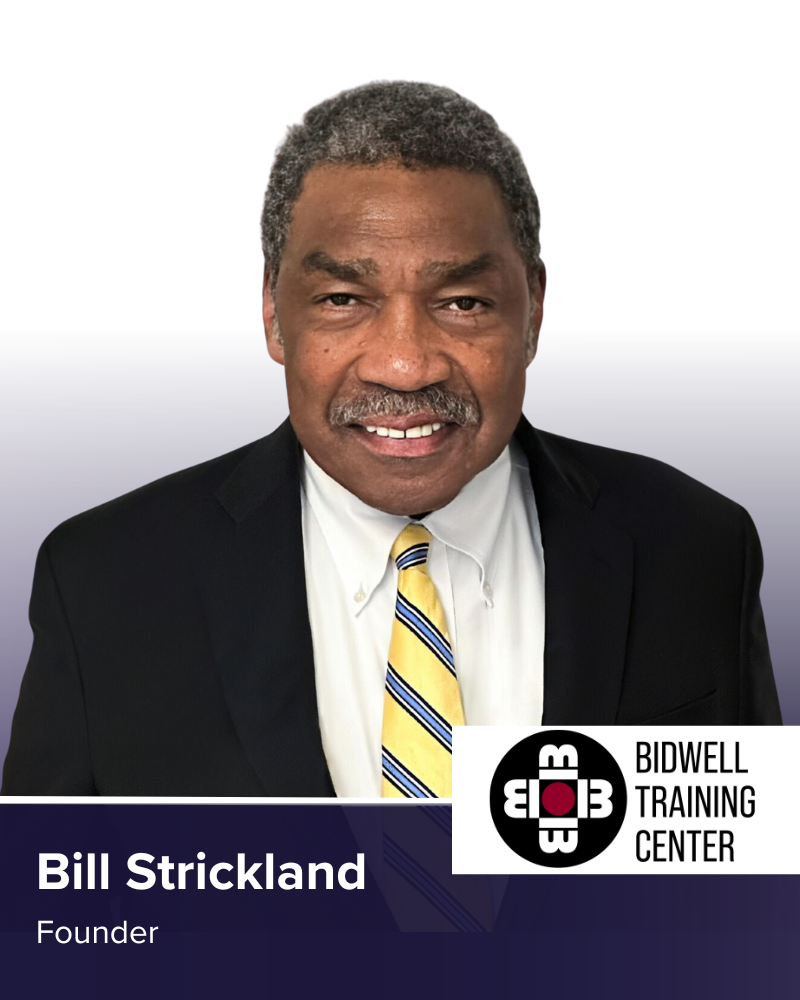
Bill Strickland has spent five decades proving that dignity and trust transform people and performance, and at CCW Nashville he’ll bring that philosophy directly to customer contact leaders. Bill’s passion for and commitment to providing dignity and opportunity to the world’s overlooked communities has inspired a global movement, and it offers invaluable lessons for leaders striving to bring out the best in their people. Since founding the Manchester Bidwell Corporation in 1972 to uplift one of Pittsburgh’s most disadvantaged communities, Bill has expanded his original program to include over a dozen training centers worldwide through the Strickland Global Leadership Institute. In this Q&A, Bill previews the human-centric philosophy behind his CCW Nashville keynote, “Make the Impossible Possible,” and shows how the simple values of respect, trust, and hope can break down the tallest of barriers and lead to the most extraordinary results within your organization.
KT: To start off, I’d love to give any of our attendees who aren’t familiar with you a quick overview of your story. Can you tell us how you’ve gotten to where you are now?
Bill Strickland: I built a training center in Pittsburgh called Manchester Bidwell Corporation and worked there for 50 years. Since then, I’ve transitioned into a new level of responsibility, because I’m building an international organization to take what we learned in Pittsburgh and use it internationally. We have centers in Puerto Rico, Vancouver, and Pennsylvania. They’re all devoted to industry-specific vocational education. One example is our center in Israel, where we’ve had Jewish students and Arab students going to school together for the last 7 years, 30 miles from Lebanon. Incredibly, that center is still open, offering vocational training and education in the arts, photography, digital imaging, and so forth–and because of the restrictions on what Muslim women there can do professionally, we’ve added a cosmetology program.
The idea is to take people who have been disregarded by society and to provide them with an education where they can become competitive in the communities where they live. We’ve taken that formula everywhere–we have 17 centers now open and operating. And they’re all doing very similar work. Not one of the centers we’ve opened has closed. In fact, they’re all doing pretty well for themselves.
It’s a story about how a guy like me, a poor black kid from the inner city, could figure out how to inspire and motivate kids so that they feel like their lives are worth something. We are developing that into an art form, we believe, that will have great application, both nationally and internationally someday.
KT: I know many of your centers’ graduates are extremely successful in the companies they join. How do you go about designing a program that’s both industry-specific and universally applicable?
Bill Strickland: The leaders in our centers are very good at customizing training specific to their community.
If there’s any magic sauce, that’s it. We go to the communities and ask them what they want, not what we want. That simple concept, reaching out to people who have lost their way–or lost their hope–and creating environments that let them know that their lives have meaning, can actually change the trajectory of their life permanently.
I don’t have a business degree, but I have 3 Harvard Business School case studies that document that.
I do a lot of speaking, and we’ll always get people in the audience saying, “This guy’s making a lot of sense, tell us more!”
That’s an important first step, because I’m not selling, I’m presenting. And because I received a lot of notoriety, particularly with Harvard and so forth, I wrote a book called Make the Impossible Possible. The book and the speeches have both generated a lot of interest in the work that we’ve done and the impact Bidwell has had on the global community.
People meet the people from the centers that we’ve created, and that often generates further interest in what we’re doing. The centers themselves create other opportunities for the communities we’ve customized those programs to.
KT: What are you most proud of in your life and career?
Bill Strickland: I’ve survived! The work we do is tough; it’s not an easy gig. .
As the book says, I’ve tried to make the impossible possible for communities all over the world. I’ve gone into terrible environments with people who have given up on themselves, and transformed their lives, helping them become productive citizens who are able to make a living. These are people that everybody has given up on, and rather than going to jail, with me, they’re going to school, and they’re going to work. They pull themselves, and oftentimes their children, out of poverty, and have a good life.
We figured out the math: $17,000 per person per year to go through our programs, and $40,000 to lock them up in a penitentiary.
It’s a math problem. Do the math.
And so far, it’s worked out pretty good–I’ve got Harvard interested, I wrote a book, I won a MacArthur Genius Award, I hung out with the Dalai Lama and all these people… A black kid from the inner city of Pittsburgh. You know, it’s been an interesting ride.
KT: When you’re speaking to a room full of people who work in customer experience and customer contact in October, what do you most want them to take away from your session?
Bill Strickland: That life is about hope and opportunity. Just because you’re poor, does not mean that you have no qualifications. And that if you want to exercise responsibility, you start at the beginning, not at the end.
One of my mottos is “environment drives behavior.” If I have any banner, that’s it. That in order to have people as assets, you can’t treat them like liabilities. That is translated into each of our training facilities, which are world-class–all 17 of them. And the result of that is translated into lower crime rates in those neighborhoods, as well as corporate citizens who are very excited about the quality of the students they’re starting to get from those communities. So, we’ve opened up a pathway that others can follow, particularly an audience like yours.
Part of the reason I think I won the MacArthur Genius Award is that I figured out the cure for cancer of the human spirit. It’s hope, it’s light, it’s food. It’s music. It’s literally putting light into the darkest places in the world.
And I believe it’s a universal strategy. It will work in Belfast, it’ll work in Israel, it’ll work in India. It’s not dependent on anything other than redefining the way in which we treat people.
And part of my presentation with you guys is that I’m not just presenting, I’m recruiting. I want to talk people into helping me change the environment. One kid at a time, one school at a time.